Pharmaceutical Sciences. 32(2):173-184.
doi: 10.34172/PS.026.42744
Review Article
Advancements in Gastroretentive Drug Delivery Systems: A Review on Sublimation Technique in Floating Tablet Formulations
Kathie Wee Ping Ling Conceptualization, Writing – original draft, Writing – review & editing, 1 
Mohd Amir Shahlan Bin Mohd Aspar Writing – review & editing, 2
Umme Tabassum Arobi Katha Validation, 1
Mohd Akmal Bin Azhar Supervision, Writing – review & editing, 1, *
Author information:
1Faculty of Chemical and Process Engineering Technology, Universiti Malaysia Pahang Al-Sultan Abdullah, Kuantan, Pahang, Malaysia
2Faculty of Electrical & Electronics Engineering Technology, Universiti Malaysia Pahang Al-Sultan Abdullah Kuantan, Pahang, Malaysia
Abstract
Gastroretentive drug delivery systems (GRDDS) have emerged as a highly promising strategy to achieve better therapeutic outcomes and enhance patient compliance in oral drug delivery systems. Among the GRDDS, conventional effervescent floating tablets are the most frequently implemented. However, this method often experiences a delay before floating, which results in incomplete drug release and reduced dose effectiveness. The issue of delay to float can be resolved by reengineering the tablet’s porous structure, which is referred to as sublimation. Sublimation is a method that has gained considerable attention to significantly enhance buoyancy and prolonged gastric retention with no floating lag time. This review emphasizes the optimization strategies for sublimation-based formulations. Camphor and menthol are reported among the promising sublimation agents, as they could prolong buoyancy up to 24 hours. Additionally, utilization of polymers like hydroxypropyl methylcellulose (HPMC) is reported to be critical as it helps to control and maintain the integrity of dosage form and drug release. In this review, the principles, advantages, and disadvantages of frequently used sublimation agents are discussed individually and their combination to explore novel sublimation agents in GRDDS. In addition, the current strategies of sublimation in GRDDS and the potential for refining formulation parameters are examined to investigate possible alternatives to enhance therapeutic effects and optimize manufacturing processes.
Keywords: Floating tablets, Gastroretentive drug delivery systems, Narrow absorption window, Porosity, Sublimation, Sustained release
Copyright and License Information
© 2026 The Author(s).
This is an open access article and applies the Creative Commons Attribution Non-Commercial License (
http://creativecommons.org/licenses/by-nc/4.0/). Non-commercial uses of the work are permitted, provided the original work is properly cited.
Funding Statement
This work was supported by Universiti Malaysia Pahang Al-Sultan Abdullah under Grant No. RDU243721.
Introduction
The oral route remains the most commonly used and preferred route for drug administration, as it provides safety, is easy to consume, and is flexible in designing the dosage form. It also offers advantages, including ease of large-scale production and affordability, which makes it a widely used approach for drug delivery systems.1 However, the conventional oral drug delivery systems often fail to achieve an efficient therapeutic effect. This is because when the dosage form is administered, the drug remains effective for a short period of time before it gets eliminated from the body. In most cases, the effective duration of a conventional drug delivery system ranges between 4 to 6 h depending on the pharmacokinetics of the drug and its elimination half-life. For example, a drug like glipizide has an elimination half-life of 2 to 4 h.2 Therefore, to ensure the concentration of the drug remains within the therapeutic window, frequent dosing is needed in a short period of time or taking a higher dose. However, these result in poor patient compliance and negative side effects such as systemic toxicity. The therapeutic window is the range of the plasma drug concentration between the minimum effective concentration (MEC) and the toxic level. When the concentration is within this range, it can give effective outcomes without adverse or toxic effects.3
Over the past few decades, oral controlled drug delivery systems (CDDS) have evolved significantly to overcome the limitations of conventional oral drug delivery systems. CDDS offer key therapeutic benefits, such as ease of administration, improved patient compliance, and reduced toxicity.4 CDDS maintained a constant drug level within the therapeutic window for an extended period of time without the need for repeated dosing. However, these systems face several challenges in formulating drugs that have low bioavailability, which can be caused by factors such as the complexity of the gastrointestinal tract (GIT), pH variations, gastric retention time, and absorption window. These challenges often result in incomplete drug release, reduced dose effectiveness, and the need for multiple dosing.5,6 To overcome these issues, gastroretentive drug delivery systems (GRDDS) have been developed, which enhance drug release and improve therapeutic outcomes.
GRDDS is an approach designed to extend the gastric residence time of the drug in the stomach. This approach increases the therapeutic effectiveness without the need for multiple dosing, thus increasing patient compliance.7 GRDDS can be divided into two categories: floating and non-floating drug delivery systems. Among these systems, floating drug delivery systems (FDDS) are the most effective and simplest strategy to achieve prolonged gastric retention. FDDS works by introducing low-density components into the dosage form that reduce the overall bulk density of the formulation to a value below that of gastric fluid, which is approximately 1.004g/cm3. This approach allows the dosage form to stay buoyant on the gastric contents.8,9 A minimum level of gastric content and buoyancy force is needed for the dosage form to remain afloat.10 This prolonged gastric retention time enhances drug absorption, improves therapeutic efficacy, and maintains stable drug levels in the bloodstream. Even though effervescent and polymer-swelling floating systems work well, they can exhibit delay before buoyancy and may be influenced by gastric pH and fluid volume.11
In the past two decades, significant interest has been shown in the sublimation technique for enhancing FDDS, specifically in extending the period of availability in the stomach. This method involves solid sublimation agents turning directly into gas without passing through the liquid phase, which creates a porous structure. Thus, it reduces the density of the dosage form and promotes instant buoyancy with no delay.12
Although several studies have demonstrated the uses of sublimation agents such as camphor, menthol, ammonium carbonate, and borneol in enhancing floating behavior and controlling drug release, there is a gap in detailing the principles, selection criteria, formulation parameters, and challenges to this technique. Therefore, this review aims to provide a comprehensive overview of sublimation techniques in developing floating tablets and its reflection on the physicochemical properties of floating tablets. In addition, the review also emphasizes critical criteria for selecting sublimation agents and their optimization. Lastly, limitations, innovative solutions, and future directions for the advancement of sublimation-based gastroretentive formulations are discussed.
Fundamentals of Gastroretentive Drug Delivery Systems (GRDDS)
Gastroretentive drug delivery systems (GRDDS) are innovative formulations that aim to extend the retention time of the dosage form in the stomach.13 These systems are beneficial for drugs that have a narrow absorption window, those that only absorbed predominantly in the stomach or upper GIT, or drugs that degrade in the alkaline environment of the intestines (pH 8-10).14 Under normal conditions, conventional oral dosage forms have a gastric emptying time of approximately 1.5 to 2 h or more in the fed state and as short as 0.5 h to 1 h when fasted. This short gastric residence time limits the time the drug remains in the stomach. By prolonging gastric retention time for at least 4 to 6 h, GRDDS improves the bioavailability of the drugs with poor intestinal absorption. This system provides sustained drug release, reduced dosing frequency, and enhanced therapeutic efficacy while maintaining the stability of the drug in the stomach’s acidic conditions.15 The dissolved drug in GRDDS is released at a constant rate and absorbed through the absorption window. Figure 1 shows the drug absorption of the conventional drug delivery system and gastroretentive drug delivery system through the absorption window. In the conventional dosage form illustrated in Figure 1A, the drug rapidly transits through the GIT, where it passes through the absorption window too quickly. This process causes the contact time of the drug with the absorption window to be too short, which results in incomplete absorption as some drugs are not being absorbed. Figure 1B shows a gastroretentive drug delivery system designed to retain in the stomach for a longer period. This extended gastric residence allows the drug to dissolve slowly and continuously directly above the absorption window. This arrangement maximizes the time available for absorption, which ensures a complete and sustained absorption.16
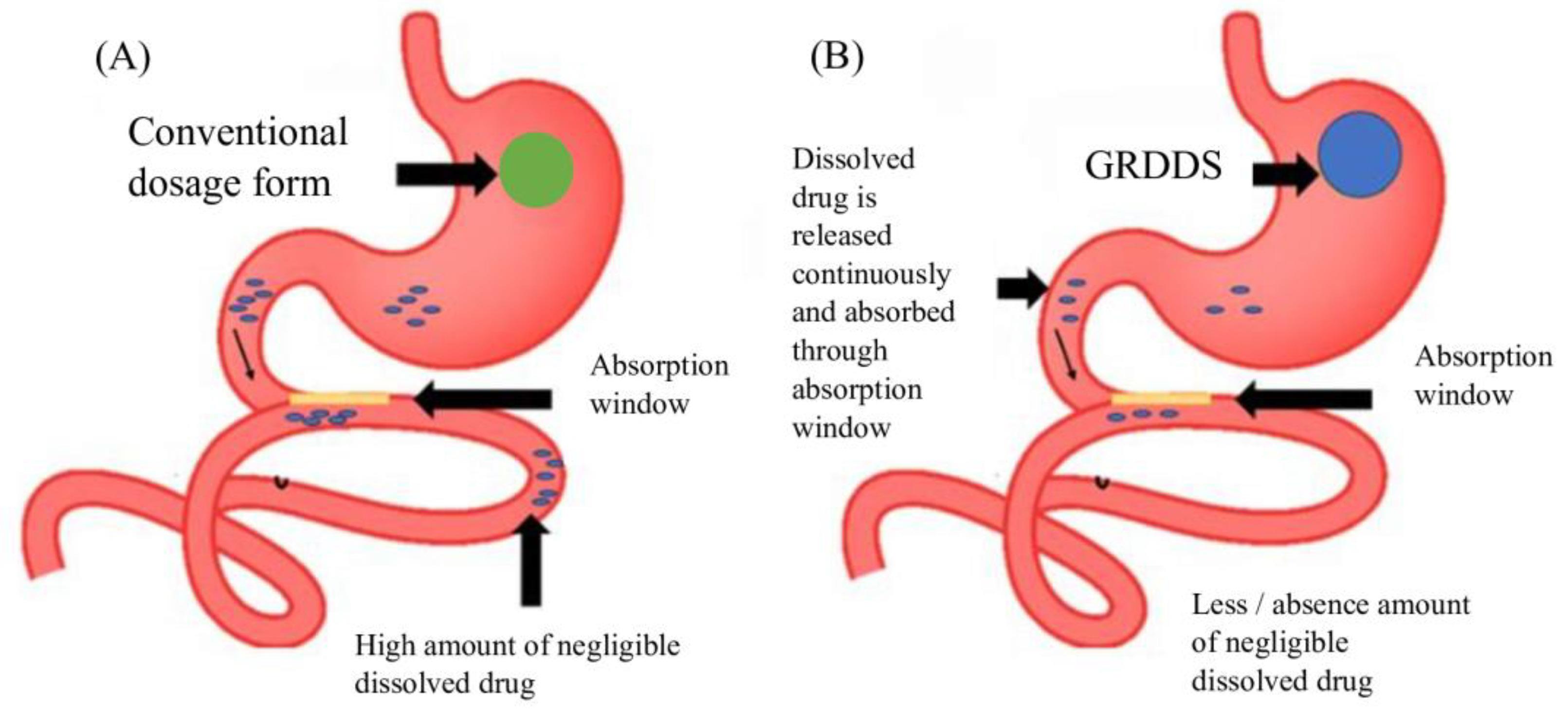
Figure 1.
Comparison of drug delivery systems. (A) Conventional Drug Delivery System: Standard drug release without prolonged retention. (B) Gastroretentive Drug Delivery System: Designed to stay in the stomach, improving drug absorption and effectiveness
.
Comparison of drug delivery systems. (A) Conventional Drug Delivery System: Standard drug release without prolonged retention. (B) Gastroretentive Drug Delivery System: Designed to stay in the stomach, improving drug absorption and effectiveness
Drugs often face physiological challenges within the GIT that can limit their effectiveness. These challenges include a narrow absorption window in the upper GIT, short drug half-life, instability of the drug in the gastrointestinal environment, local activity in the upper GIT, and poor solubility in high pH conditions.17,18 Table 1 highlights the example of drugs that are suitable for the formulation with gastroretentive strategies.GRDDS can be categorized into several types based on their mechanism of gastric retention. These include floating systems, swelling systems, bioadhesive or mucoadhesive systems, and high-density systems, as shown in Figure 2.19 These systems are explained in Table 2.
Table 1.
Suitable Drug Candidate for GRDDS with its Therapeutic Indication
|
Drug
|
Bioavailability Challenges
|
Therapeutic Indication
|
References
|
| Levofloxacin |
Local activity |
Peptic ulcer and reflux esophagitis, eradication of H.pylori |
20
|
| Metronidazole |
21
|
| Metformin |
Short half-life; narrow absorption window |
Type II diabetes mellitus |
22
|
| Hydrochlorothiazide |
Short half-life; narrow absorption window |
Hypertension |
23
|
| Losartan Potassium |
Narrow absorption window; short half-life |
24
|
| Captopril |
Instability within the colonic environment; short half-life |
Treatment of hypertension and congestive heart failure |
25
|
| Valsartan |
Low bioavailability, short half-life |
Heart failure, diabetic nephropathy, and hypertension |
26
|
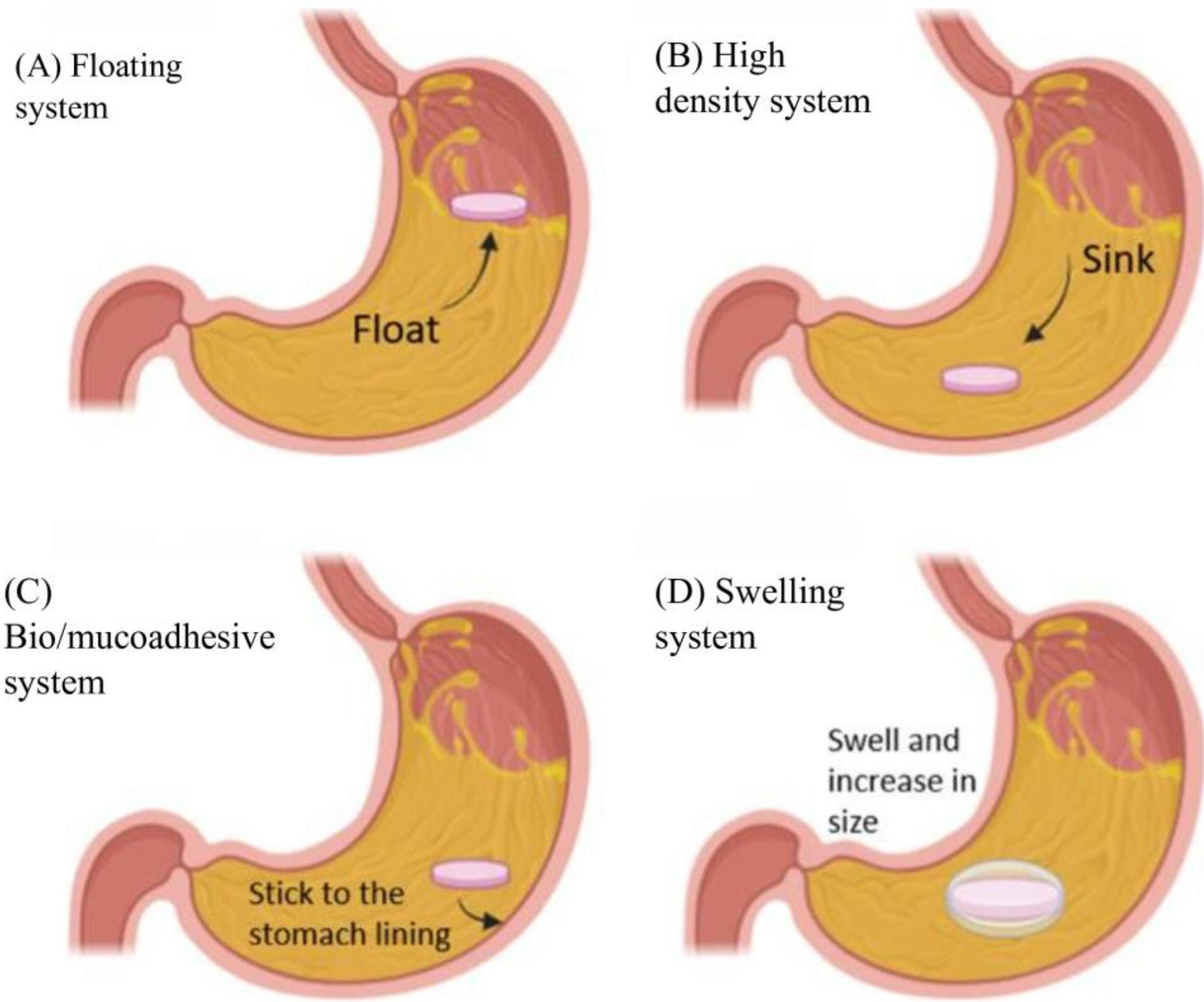
Figure 2.
Types of gastroretentive drug delivery system; (A) Floating system (B) High density system, (c) Bio/mucoadhesive system, (D) Swelling system19
.
Types of gastroretentive drug delivery system; (A) Floating system (B) High density system, (c) Bio/mucoadhesive system, (D) Swelling system19
Table 2.
Types of Gastroretentive Drug Delivery System (GRDDS), including their Mechanism, Benefits and Disadvantages
|
Types of GRDDS
|
Mechanism of Action
|
Key Benefits
|
Disadvantages
|
References
|
| Floating Systems |
The dosage form is designed to have a lower density than gastric fluid so that it remains buoyant in the stomach. |
Increases the gastric retention time; improves bioavailability; does not affect gastric motility; facilitates controlled and sustained drug release. |
Exhibit floating lag time; risk of premature gastric emptying; unsuitable for patients with achlorhydria, where reduced gastric acid levels will prolong the floating lag times. |
9,15
|
| Swelling Systems |
Utilize hydrophilic polymers that absorb gastric fluids and undergo expansion upon contact. Once ingested, these polymers swell to form a gel-like structure, significantly increasing the size of the dosage form. |
Slows gastric emptying; extends the retention time; promotes controlled and gradual drug release; improves bioavailability. |
Requires sufficient fluid intake to ensure proper expansion and functionality; retention time can be inconsistent as it is influenced by individual differences in gastric motility |
16,27,28
|
| Bio/mucoadhesive Systems |
Adhere to the mucin layer or epithelial cells lining the stomach with the aid of bioadhesive polymers. |
Prolong the gastric residence time. |
Unpredictable site of adhesion; risk of unintended binding (in the esophagus); potentially reduced retention caused by rapid mucus turnover rate in the stomach, which may lead to premature elimination. |
27
|
| High-density systems |
Dosage form is designed to have a density greater than gastric fluids, which enables them to sink and stay at the base of the stomach. Barium sulphate, zinc oxide, iron powder, and titanium dioxide are the commonly used excipients in the formulation. |
Prolong the gastric residence time; improve bioavailability. |
Difficult to attain the required density range of 2.4–2.8 g/cm³ while ensuring a medication volume surpasses 50% for effective retention; not suitable for high-dose pellets; complex manufacturing process. |
29
|
Floating Drug Delivery System (FDDS)
FDDS are divided into two main categories according to their floating mechanism: effervescent and non-effervescent systems. The effervescent system relies on gas generation to achieve buoyancy. Effervescent agents, such as sodium bicarbonate and citric acid, are mixed into the dosage form. When they reached the stomach, they reacted with gastric fluids to produce carbon dioxide gas. This gas becomes trapped within the tablet matrix, reducing its density and enabling it to float. These systems are effective in prolonging gastric retention time and facilitating controlled drug release.10,17 Examples of these systems include volatile liquid- containing systems and gas-generating systems. Conversely, non-effervescent systems utilize highly swellable cellulose-based hydrocolloids, gel-forming hydrocolloids, or matrix-forming polymers such as polyacrylate, polystyrene, and polycarbonate to maintain buoyancy without the need for gas generation.30 Examples include formulations with hydrophilic polymers that swell upon contact with gastric fluids, as well as the use of materials such as polypropylene foam powder. These systems are subcategorized into hydrodynamically balanced systems, microballoons or hollow microspheres, sintering and sublimation systems, alginate beads, and microporous compartments.31
Sublimation Technique in FDDS
Figure 3 illustrates the sublimation system to produce porous structure within the tablet. The active pharmaceutical ingredient (API) is mixed with excipients and sublimation agent such as camphor, ammonium carbonate, menthol or borneol. The mixture is then compressed into tablets, where the compression force is adjusted to ensure the tablets have adequate mechanical strength to withstand handling while maintaining adequate porosity to allow for effective sublimation. High compression force may reduce the porosity of the tablet, while low compression force may result in insufficient mechanical strength.32,33 At room temperature, the particles of the sublimation agents are arranged in solid phase. In this phase, the particles are tightly packed in lattice structure. The particles vibrate in place and do not freely move. The solid-to-gas conversion occurs through the heating the tablet in vacuum oven (low pressure) at specific temperature and duration. During the heating process, the sublimation agent absorbs heat, which provides enough energy for the agent to overcome the intermolecular force and escape to the vapor phase. At this phase, the molecules are freely moved and escaped as gas. The internal energy that is needed for a phase change is equal to the latent heat of fusion and work done by the molecules to expand at constant pressure. This energy changes the enthalpy of the system, and the change in enthalpy is equal to the heat supplied through conduction and convection.34 When the sublimation agent evaporates, it forms a porous network (small holes) within the tablet where the agent originally existed. The creation of a porous structure causes air to become trapped within the dosage form, which increases the overall volume of the tablet without increasing the mass. The pores act as a low-density component that reduces the overall density35 and promotes immediate buoyancy, which prolong gastric retention.36 Figure 4 illustrates the tablet with a porous structure formed by sublimation of the sublimable agent.37
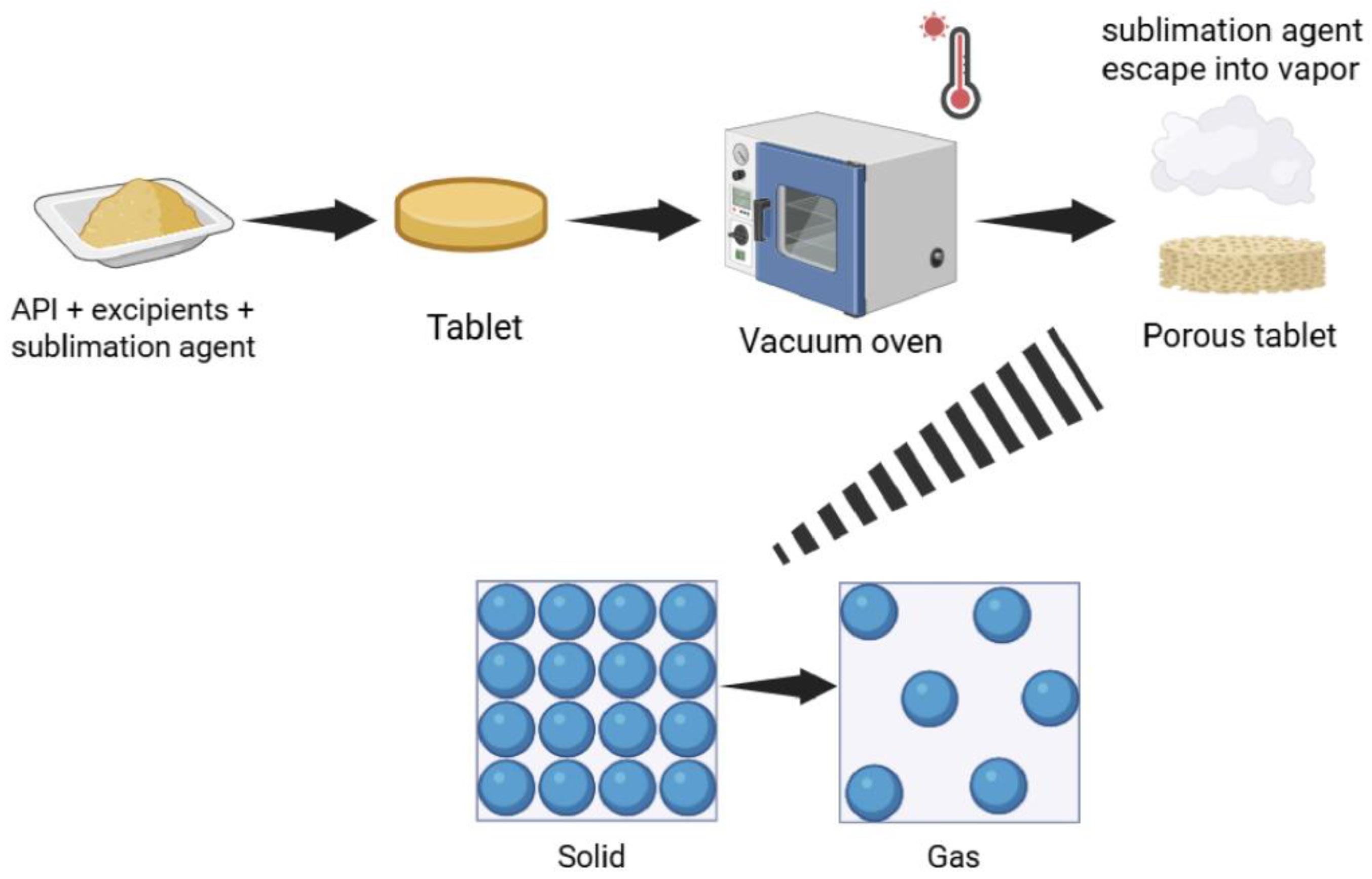
Figure 3.
Formation of porous tablet using sublimation system
.
Formation of porous tablet using sublimation system
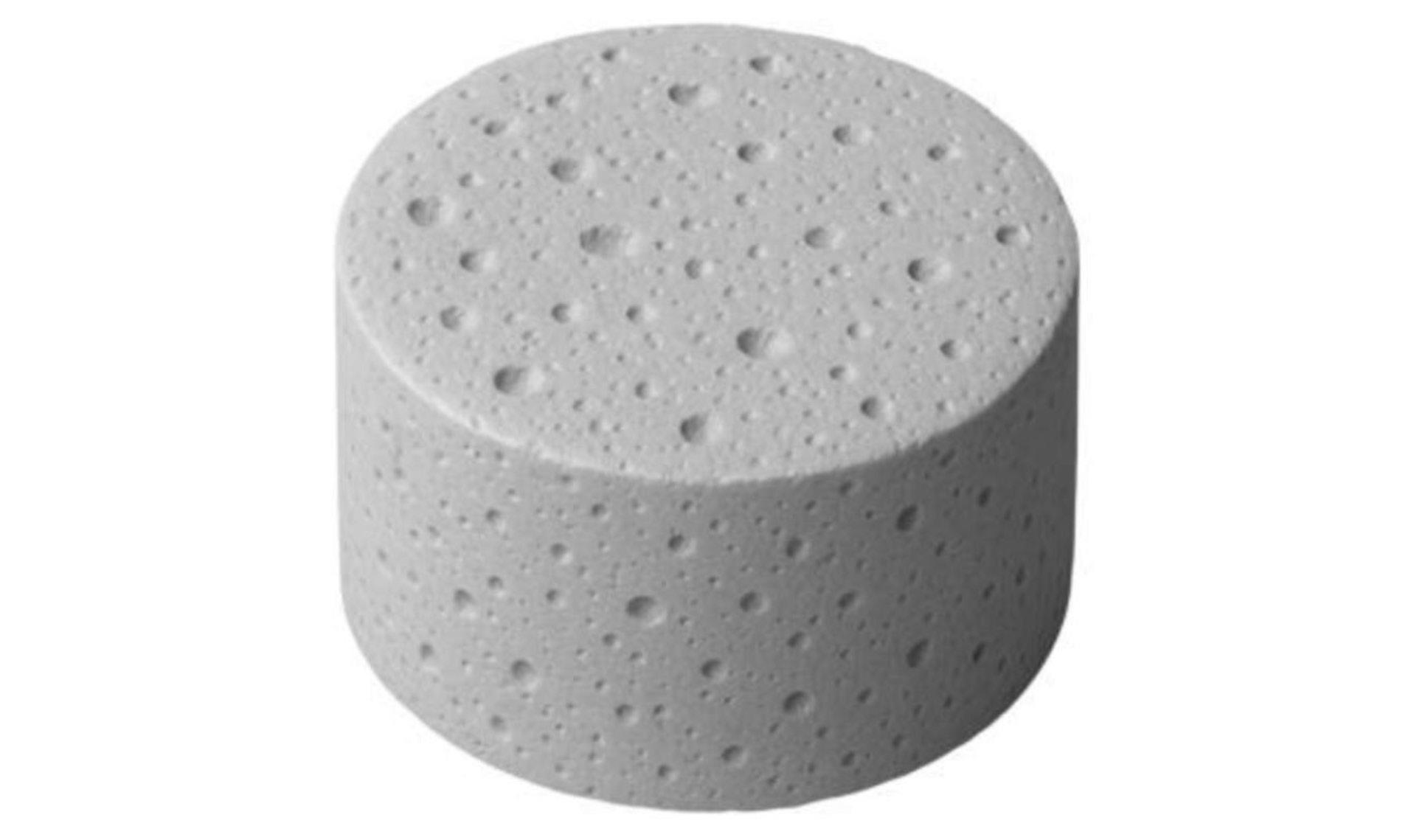
Figure 4.
Porous structure of tablet formed by sublimation system37
.
Porous structure of tablet formed by sublimation system37
The application of the sublimation technique in FDDS has been explored by various research groups. Table 3 summarizes several key studies from the last two decades. Almost all formulation developed using sublimation technique floated immediately, as indicated by zero floating lag time observed in the studies. This is due to the porous structure of the dosage form, which allows air to be trapped inside and make the dosage form low-density. Effervescent system relies on gas generation by sodium bicarbonate with gastric fluid to create buoyancy, which leads to a delay before floating. The floating lag time may increase the risk of premature gastric emptying, where the dosage form might be emptied from the stomach before it floats, reducing the therapeutic effectiveness. Research reveals that some of the formulations developed using effervescent system had an average floating lag time of 30 min.38 A study by Prusty et al9 demonstrated that tablets developed using effervescent system had a floating lag time of 60 s and floating duration of 12 h. Another study by Rahamathulla et al26 that developed floating effervescent tablet has demonstrated a floating lag time of 120 s. Study by Das et al39 demonstrated a floating lag time of 22 s. In fact, almost all formulations developed using the effervescent system have a floating lag time, and the duration can vary between different formulations. This variability in floating lag time highlights the challenge in ensuring consistent gastric retention and controlled drug release. The study by Samanta R et al40 had developed gastroretentive floating system using hydrodynamically balanced system. The result showed that the dosage form floated immediately but only floated for 6 h. An ideal floating duration would be above 12 h as this duration can ensure a better sustained drug release, especially for water-soluble drug. Therefore, non-effervescent sublimation system is preferred due to its immediate buoyancy when contact when gastric fluid and prolonged gastric retention of more than 12 h.
Table 3.
Related Research of Sublimation Technique in Floating Drug Delivery System (FDDS)
|
Year
|
Sublimation Agent
|
Floating Lag Time (s)
|
Floating Time (h)
|
Other Outcomes
|
Reference
|
| 2024 |
Ammonium carbonate, camphor, borneol, menthol |
0 |
8 |
Different sublimation agents and polymers affected floating properties and drug release rate |
11
|
| 2021 |
Camphor or l-menthol |
0 |
≥ 8 |
Increased sublimation agent and polymer concentration decreased density |
12
|
| 2020 |
L-menthol |
0 |
> 24 |
Tablet porosity depends on sublimation agent concentration; prolonged buoyancy |
25
|
| 2020 |
Camphor |
0 |
> 12 |
Higher gum concentration resulted in more retarded drug release |
41
|
| 2016 |
Camphor |
0 |
10 |
Optimized formulation via Box-Behnken design; 86.32% drug release at 10 h |
42
|
| 2016 |
Camphor |
0 |
6 |
Sublimation temperature affected sublimation and drug release rate |
43
|
| 2015 |
Ammonium carbonate |
180 |
> 8 |
Different polymer concentrations did not affect results |
44
|
| 2013 |
Camphor |
0 |
> 24 |
Drug release affected by polymer ratio; prolonged buoyancy |
22
|
| 2011 |
L-menthol |
0 |
> 6 |
Drug release affected by polymer type |
45
|
In addition to enhancing buoyancy, the porous structure created by the sublimation process allows gastric fluids to penetrate the system, facilitating drug dissolution and release. The drug release kinetics are influenced by factors such as the type and concentration of sublimation agents, the viscosity of the polymer, and the erosion rate of the matrix. The drug release from floating systems is determined by the diffusion and erosion mechanisms. The porous structure created by the sublimation agent allows the drug to diffuse out of the system, while the erosion of the polymer matrix contributes to the sustained release of the drug over time.25 The zero- order release model, first-order release model, Higuchi release model, and Korsmeyer and Peppas equation are often used to describe the mechanism of release kinetics.46 Kriangkai et al11 has indicated that formulations lacking sublimation agents failed to achieve buoyancy, despite the inclusion of polymers. This highlights the essential role of sublimation agents in enabling floating properties within such systems. The use of sublimation agents in FDDS offers several advantages. These agents enhance the buoyancy by creating porous structures that lower the density of the system, enabling it to remain afloat in the gastric fluids. This buoyancy is important for ensuring prolonged gastric retention. The porous structure, often combined with polymer, facilitates sustained and controlled drug release, which ensures prolonged therapeutic effects. This improves the patient compliance by decreasing the dosing frequency.11
Types of Sublimation Agent
Several sublimation agents have been investigated for FDDS development, each possessing unique properties that influence tablet performance. Table 4 provides an overview of the sublimation agents employed in previous studies, highlighting their respective properties and contributions to formulation outcomes. These agents include camphor, ammonium carbonate, menthol or L-menthol, and borneol.
Table 4.
Types of Sublimation Agent with their Descriptions, Properties, Concentration, and its Outcomes
|
Types of sublimation agents
|
Description
|
Properties
|
Concentration (mg)
|
Formulation contributions / Outcomes
|
Reference
|
| Camphor |
A widely used organic sublimation agent, obtained naturally or synthesized. |
Low sublimation temperature; able to create a highly porous network; volatile; easy to evaporate. |
18 |
Floated at least 8 h, 68.02% drug release at 8 h. |
12
|
| Ammonium carbonate |
A salt compound that decomposes upon heating to release ammonia and carbon dioxide gases. |
Highly volatile; able to create a porous network; decomposes without residue |
90 |
Floated over 8 h, 80% drug release at 8 h. |
11
|
Menthol/
L-menthol |
A naturally occurring organic compound found in mint oils. |
Biodegradable; low sublimation temperature; able to create a porous network. |
18 |
Floated at least 8 h, 74.20% drug release at 8 h. |
12
|
| 125 |
Floated over 24 h, 10% drug release in 12 h. |
25
|
| 90 |
Floated over 8 h, 90% drug release at 8 h. |
11
|
| Borneol |
A natural terpene extracted from plants, often used in traditional medicines. |
Low sublimation temperature; biocompatible; able to create a porous network. |
90 |
Floated over 8 h, 80% drug release at 8 h. |
11
|
Camphor
Camphor (Cinnamomum camphora) is a volatile, aromatic, and transparent crystal that is derived from turpentine oil or the wood of the camphor tree found in Asia. The chemical formula C10H16O classifies it as a terpene ketone. It has a wide range of medical applications, such as antiseptic, anti-inflammatory, topical analgesic, and anti-infective.47 In pharmaceutical formulations, camphor is used as a sublimation agent in FDDS due to its volatile properties; it leaves no residue when sublimated. Camphor has weak intermolecular forces between its molecules. At certain temperatures, when it absorbs heat and has enough energy to overcome the intermolecular forces, they will escape into the surrounding environment as gas.48 The sublimation of camphor results in the formation of a porous structure in the tablet and leaves no residue.
Ammonium Carbonate
Ammonium carbonate is a white, crystalline salt with a chemical formula (NH4)2CO3 that decomposes upon heating to release ammonia and carbon dioxide gases. It is commonly used as a leavening agent in baking, as well as in pharmaceuticals and cleaning products. In GRDDS, ammonium carbonate is utilized as a sublimation agent. When exposed to temperature, ammonium carbonate decomposes to release ammonia and carbon dioxide gases. The formation of these gases creates a porous structure within the drug formulation. This porosity reduces the density of the formulation, allowing it to float on gastric fluids. The floating behavior prolongs the gastric residence time of the drug delivery system, facilitating sustained and controlled drug release. This mechanism improves the drug’s bioavailability and therapeutic effect.11
Menthol
Menthol, C10H20O is an organic compound with a minty taste and odor, derived from peppermint or other mint oils. It is widely used in products like toothpaste, mouthwash, cough drops, and topical analgesics for its cooling and soothing properties. Menthol functions as a sublimation agent in GRDDS. When menthol sublimates, it transitions directly from a solid to a gas, creating a porous structure, reducing the formulation’s density, and enabling it to float on gastric fluids. The enhanced buoyancy ensures prolonged gastric retention, allowing for controlled and sustained drug release. This mechanism improves the bioavailability of the drug and enhances its therapeutic efficacy. The study indicated that the porous structure of menthol resulted in faster erosion and drug release.11
Borneol
Borneol, C10H18O, is a bicyclic organic compound with a camphor-like odor. It is found in the essential oils of various plants, such as rosemary and thyme. Borneol is used in traditional medicine for its analgesic, anti-inflammatory, and antimicrobial properties. It is also employed in perfumes and as a flavoring agent.49 Borneol acts similarly to camphor in GRDDS. Upon heating at the sublimation temperature, borneol sublimates and creates a porous structure that enhances the buoyancy of the delivery system. The floating behavior of the formulation allows it to remain in the stomach for a longer duration, enabling controlled and sustained drug release. This prolonged gastric retention improves the bioavailability of the drug, ensuring that it is absorbed more efficiently.11
Based on the previous research, almost all formulations developed by using the sublimation technique exhibited immediate buoyancy with no floating lag time. This characteristic makes the sublimation system a better choice compared to the effervescent floating system, in which the effervescent system experiences a delay before achieving buoyancy. However, the sublimation system’s results varied, primarily due to differences in the concentrations of the same sublimation agents used in the formulations. This trait underscores the critical role of the concentration of the sublimation agent in optimizing both buoyancy and drug release behavior. For example, El-Aziz et al12 and Kriangkai et al11 used the same type of sublimation agent, menthol, but with different concentrations, which were 18mg and 90mg, respectively. At 8 h, the drug release was 74.2% and 90%, respectively. This showed that decreased concentrations of the sublimation agent result in a more retarded drug release.11,12 However, there are limited studies on how the drug release affects the porous structure formation. These findings might be due to the formation of a more uniform porous structure when a higher concentration of sublimation agent is used. Some results may be attributed to the research being conducted over shorter time intervals, which might not have allowed for comprehensive observations or conclusions. As a result, the findings could lack insights into the prolonged effects of the formulation, such as extended drug release profiles or sustained buoyancy over longer durations. Therefore, future research should be conducted for at least 72 h to observe the floating behavior and drug release, as sustained drugs can stay in the body system for up to 72 h.
The study by Kriangkai et al11 offers significant understanding of how different sublimation agents perform in the development of floating tablet formulations. By analyzing the performance of different sublimation agents under consistent experimental conditions, the study highlighted that menthol is an effective sublimation agent in floating tablet formulations due to its low sublimation temperature and excellent ability to form porous structures that enhance buoyancy. In contrast, other agents like camphor, borneol, and ammonium carbonate showed comparatively lower performance. Ammonium carbonate requires a higher concentration to achieve similar floating properties. However, tablets formulated with ammonium carbonate as a sublimation agent showed a higher mechanical strength compared to those using menthol.11 The differences may be attributed to the unique sublimation and pore-forming characteristics of each agent, which influence both the physical structure of the tablets and their functional outcomes. These illustrate the potential benefits of combining sublimation agents such as menthol and ammonium carbonate to optimize the performance of FDDS.
Optimization of the Sublimation Technique
Optimization is an important process in drug development. The process ensures that the final product meets the expectation in terms of quality, safety, and efficacy. In the sublimation technique to develop floating tablets, it is essential to optimize various parameters to maximize their performance. Factors such as the concentration of the sublimation agent, the heating temperature, the heating duration, and the concentration of polymers must be carefully adjusted to achieve ideal buoyancy, drug release rate, and mechanical strength.
Concentration of Sublimation Agent
To achieve the optimal floating and drug release characteristics, the concentration of the sublimation agent can be adjusted using factorial design techniques, ensuring consistency between predicted and actual results. Research revealed that tablets containing over 40 mg of camphor exhibited immediate buoyancy, with no floating lag time, and maintained floatation for over 24 hours. On the other hand, formulations with camphor concentrations below 20 mg failed to achieve buoyancy.22 Another study demonstrated that increasing the amount of L-menthol in the tablets leads to the formation of greater porosity with up to 24 h of floating time due to enhanced pore generation. Conversely, as porosity increases, the bulk density of the tablets decreases. The formulation with the highest L-menthol concentration (125 mg) exhibited insufficient mechanical strength and thus failed to maintain buoyancy after 24 hours.25 Based on these studies, excessive concentration of sublimation agents leads to low hardness and high friability, while an insufficient amount of sublimation agents prevents the tablet from forming enough pores and makes it unable to float. A study by Hwang et al38 demonstrated that the tablet hardness decreased as the amount of sublimation agent increased.Another study by Nguyen et al50 revealed that higher concentration of camphor (30%) had led to inconsistent floating.Therefore, determining the optimal concentration of the sublimation agent is crucial to achieving a balance between buoyancy and structural integrity and ensuring that the tablets remain afloat while retaining their physical stability.
Heating Condition of Sublimation Agents
The heating conditions, including temperature and duration, are critical factors influencing the sublimation process. Table 5 presents an overview of the heating temperatures and durations applied to sublimation agents in prior research.
Table 5.
Heating Temperature and Duration of Sublimation Agents
|
Sublimation agent
|
Heating temperature (°C)
|
Duration (h)
|
Reference
|
| Camphor |
60 |
3 |
38
|
| 30 - 60 |
24 |
43
|
| 50 |
24 |
12
|
| 60 |
24 |
22
|
| 70 |
72 |
11
|
| Ammonium carbonate |
70 |
12 |
44
|
| 72 |
11
|
| Borneol |
70 |
72 |
11
|
| Menthol |
50 |
24 |
12
|
| 60 |
24 |
25
|
| 70 |
72 |
11
|
Based on previous studies, an optimal sublimation temperature range of 60-70°C can effectively enhance the porosity formation in floating tablets. Within this range, sublimation facilitates the formation of a porous structure, thus reducing tablet density and promoting prolonged flotation. Moreover, an average sublimation duration of around 24 h is considered ideal to achieve complete sublimation. Inadequate heating, such as too low a temperature and too short a duration, may lead to incomplete sublimation, whereas excessive heat may cause the degradation of the sensitive drug or excipients. For heat-sensitive drugs, a lower sublimation temperature may be explored to minimize the risk of thermal degradation. Therefore, optimization of formulation parameters is crucial, including the determination of optimal sublimation temperature by monitoring tablet weight loss at regular intervals during sublimation until a constant weight is achieved.12 Every sublimation agent has its sublimation temperature. Therefore, research should identify the specific sublimation temperature of each agent to optimize the pore formation within the tablet.
Concentration of Polymers
The porosity created through sublimation enhances the floating capability of tablets, especially when combined with polymers such as hydroxypropyl methylcellulose (HPMC), which regulate drug release and maintain tablet integrity.11 This is due to the polymer acting as a matrix-forming agent, which retards the drug release. Examples of commonly used polymers in GRDDS are xanthum gum, guar gum, chitosan, and pectins.8 According to Fukuda & Goto,45 tablets containing polymer remained buoyant on the surface of 0.1N HCl for an extended period, exhibiting a prolonged drug release compared to tablets formulated without polymer. Another study found that the addition of specific polymers, like HPMC, improves the ability of the drug delivery system to float and swell. The swelling index of HPMC was higher compared to other polymers, and the percolation threshold for HPMC was between 13.30% and 25.06% v/v. Tablets containing 30% w/w HPMC or more showed consistent drug release. These bilayer tablets with 30% w/w or more HPMC released the drug at a steady rate, with a release exponent between 0.43 and 0.86, indicating a mix of diffusion and relaxation mechanisms. The floating tablets started to float within 3 seconds and remained afloat for over 12 hours in the dissolution test.38 These results highlight that selecting the right polymer and ensuring it is above the percolation threshold is crucial for creating an effective gastroretentive drug delivery system. These studies highlight the critical role of polymers in maintaining buoyancy, structural stability, and optimized drug release. Therefore, selecting suitable polymers and their concentration is essential for achieving the desired mechanical properties and drug release profile of the formulation.
Selection Criteria of Sublimation Agent
It is essential to understand the choice of sublimation agent, as its properties can greatly influence the tablet’s buoyancy, stability, and drug release behavior. One of the primary considerations is the sublimation temperature. A low sublimation temperature is essential to prevent degradation of heat-sensitive drugs or excipients. Most of the study showed that the sublimation process is typically carried out at temperatures between 50°C12 and 70°C.43 Next, compatibility with other formulation components, such as polymers and excipients, is also important. Ensuring the chemical and physical compatibility helps to avoid negative interactions that could affect drug stability or efficacy. For example, prior research examining the interaction between glyceryl behenate, camphor, and their physical mixture with excipients has demonstrated that all components are compatible, with no interactions observed among them.43 The safety and biocompatibility of the sublimation agents need to be considered. Non-toxic and biocompatible agents approved by regulatory authorities are extremely important for the safety of patients and compliance with pharmaceutical standards. For example, research incorporated Zein into the formulation due to its properties as a biodegradable and biocompatible protein derived from corn. It is recognized as “Generally Regarded as Safe” (GRAS) status by the FDA; Zein is considered a safe material suitable for many applications, especially in the pharmaceutical and food.25 Furthermore, the ability of the sublimation agent to generate a uniform and sufficiently porous structure is a key factor in determining the tablet’s buoyancy and its floating duration within gastric fluid. The formation of a porous structure enhances buoyancy and supports drug release by increasing the tablet’s surface area. Next, an ideal sublimation agent should be financially sustainable to ensure the overall cost of the formulation remains affordable.12 This means it must achieve a balance between being effective and cost-efficient, meeting all necessary requirements without significantly increase production costs. Cost-effectiveness is particularly important in large-scale manufacturing, where the use of expensive sublimation agents could raise the price of the final pharmaceutical product, making it less affordable to patients. Therefore, selecting a sublimation agent that is both effective and reasonably priced is essential to ensure the formulation remains affordable and sustainable.
Physicochemical Properties of Sublimated Tablet
In Vitro Buoyancy Test
The floating ability of the tablet is important for determining its gastric retention properties. This measures the floating lag time (the time for the tablet to float after contact with gastric fluid) and total floating duration (the time for the tablet to remain afloat).11,12 Typically, floating lag time is minimized or eliminated by selecting appropriate sublimation agents that generate sufficient porosity and reduce tablet density below that of gastric fluids (approximately 1.004 g/cm³). USP Apparatus Type II containing 100mL 0.1N HCl at 37 ± 0.5 (°C)is widely used to simulate gastric conditions for buoyancy testing.4,30 Studies have indicated that sublimation agents such as camphor, menthol, ammonium bicarbonate, and ammonium carbonate significantly affect these parameters, with camphor often resulting in zero lag time and floating duration exceeding 12 hours.11,43,50 However, this result may not always reflect the wide range of gastric conditions found in humans, which can affect the accuracy of these tests when predicting actual in vivo performance.50
In Vivo Buoyancy Test
The in vivo buoyancy test plays a crucial role in assessing the effectiveness of floating drug delivery systems. While many studies on GRDDS have produced promising results in vitro, only a few have been able to achieve similar outcomes in living organisms because of the variable physiological conditions.25 In the study by Hwang et al38, beagle dogs were used as the animal model to evaluate the bilayer gastroretentive tablets, which used camphor as sublimating agent. In the test, radiopaque threads were embedded within the tablets to enable tracking through X-ray imaging, allowing for a clear view of their movement through the GIT. The results showed that the tablets demonstrated immediate buoyancy. Furthermore, the tablets remained afloat up to 8 h, and stayed in stomach for 12 h.38 Another study used rabbit to evaluate the floating properties of porous tablets that developed by using menthol as sublimation agent and coated with zein polymer. The results showed that the tablet retained in the stomach for 24 h.25 These studies indicating that the sublimation method effectively produced tablet with sufficient buoyancy for extended gastric retention. These significant finding as prolonged gastric retention is essential for controlled drug release in the stomach, ensuring that the drug stays in the upper GIT long enough to be absorbed without causing gastric irritation or toxicity. While the in vivo buoyancy test showed promising results for the floating tablets, several key concerns need to be addressed. The use of animal model, though useful, has limitations when translating the results to humans. Animals have different gastric pH, motility, and emptying rates compared to humans, which could affect the tablets performance in human physiology. Therefore, although the results in dogs are promising, human trials are necessary to confirm whether these findings can be replicated in humans. Additionally, the test was conducted in a fed state, which may not reflect typical conditions in the stomach, as gastric motility and buoyancy can change depending on whether the stomach is empty or full. Moreover, factors such as body posture and gastric contractions could further affect tablet performance in real-world conditions, where patients may be in different positions or experience variations in stomach activity.15
Porosity
Scanning Electron Microscopy (SEM) is used to observe the pore structure formed within the tablet matrix. The porous structure will influence the floating properties and the mechanical strength of the tablet. Studies indicate that a more porous structure formed can increase the floating properties, while smaller uniform pores formed can increase the mechanical strength of the tablet. The choice and concentration of sublimation agents directly impact pore size distribution. For example, ammonium carbonate tends to create larger pores than menthol, leading to different buoyancy and mechanical strength.11 Gas (Helium) pycnometer is commonly used to measure the porosity of the tablet. It helps to determine the volume of empty space within the tablet. This technique quantifies the extent of porosity and helps in correlating the physical structure with the drug release and buoyancy properties. By accurately assessing the pore structure, researchers can optimize the tablet formulation to achieve the desired floating characteristics while maintaining sufficient mechanical strength for handling and transport.11,38
Mechanical Properties
The mechanical strength is assessed through a friability test or hardness tester. Friability test is carried out by Roche’s Friabilator, where the tablets are placed in the friabilator and rotated for 100 revolutions at 25 rpm. The percentage of friability is determined by Friability = (Weight initial - Weight final) / Weight initial. The acceptable percentage should be lower than 1% to ensure the tablets have a proper mechanical strength that can withstand handling and transportation.24 Sublimation increases tablet porosity, which often decreases mechanical strength; therefore, the concentration of sublimation agent and matrix polymer must be optimized to maintain friability within acceptable limits while providing adequate floating properties.50
Drug Release Kinetic
The drug’s release profile is studied to understand the mechanism of release. Different kinetic models were used, such as zero-order, first-order, Higuchi, and Korsmeyer-Peppas models. Zero-order kinetics represent a constant drug release rate independent of concentration, which is ideal for sustained release. First-order kinetics indicate that the rate at which the drug is released is proportional to the remaining drug concentration, typically for diffusion-controlled systems. The Higuchi model specifically describes drug release as a diffusion process through a porous matrix, where the amount released is proportional to the square root of time. The Korsmeyer-Peppas model is used to evaluate release mechanisms by fitting experimental data to identify whether the release is governed by diffusion, erosion, or a combination of both.11 Sublimation agents influence matrix porosity and thus affect the release mechanism. For example, tablets sublimated with camphor often show zero-order or Higuchi kinetics, indicating steady diffusion-controlled release.50 It is important to note that the sustained drug release from a porous tablet is not due to the presence of the porous structure itself. Sustained release is more closely related to the presence of polymers in the tablet. These polymers swell upon contact with gastric fluids, forming a gel-like layer. This swelling action helps control the rate at which the drug is released, allowing for extended release over time. A study by Nguyen et al50 showed that the porous bilayer tablet with hydrophobic polymer followed zero-order release kinetic. This release was due to the swelling of polymer, which prevents water from penetrating into the tablet.50 Another study by Raza et al25 showed that as the porosity of the tablet increased, the drug release rate also increased. The tablet coated with zein polymer followed the Higuchi kinetic model. These results show that the combination of sublimation agent and polymer is crucial for both prolonged gastric retention and controlled drug release.
Challenges and Limitation of Sublimation Technique
The sublimation process involves exposure to high temperatures, which can make it particularly difficult when formulating drugs or excipients that are heat-sensitive. This thermal exposure may lead to degradation or loss of stability in sensitive components, which can affect the efficacy and quality of the final product.12 To address this issue, alternative sublimation agents with lower sublimation temperatures or the exploration of protective measures, such as heat-shielding excipients, are needed to maintain the integrity of the formulation. Moreover, the porous structure formed by the sublimation agents will reduce the mechanical strength of the tablets, leading to high friability and low hardness.11 This can result in difficulties during handling and transportation, potentially affecting the overall efficacy of the drug delivery system. Therefore, formulation optimization is important to ensure that the balance between porosity and mechanical integrity allows for efficient drug release while minimizing the risk of tablet breakage. Optimizing the sublimation technique is a challenging and time-consuming process. Various parameters, such as the concentration of sublimation agents, heating conditions, and polymer properties, require extensive experimentation to achieve the desired floating and drug release properties. Moreover, achieving optimal performance in drug delivery systems also involves careful consideration of the interaction between formulation components, as these can significantly influence both the physical characteristics and therapeutic outcomes of the tablets.
Future Perspective
The sublimation technique holds a significant potential for the future gastroretentive floating drug delivery systems (FDDS). It improves the bioavailability of drugs, especially those that have a narrow absorption window. Selecting an appropriate sublimation agent is critical, in which factors such as low sublimation temperature, compatibility with other formulation components, non-toxicity, efficiency in creating porous structures, and cost-effectiveness are required. Previous studies have primarily utilized agents like camphor, ammonium carbonate, menthol (or L-menthol), and borneol in FDDS. Optimization efforts for this technique have focused on refining the concentration of sublimation agents and polymers and adjusting heating conditions and duration to balance buoyancy, drug release, and structural stability. However, challenges include issues with thermal sensitivity, mechanical strength, and the process of optimization, which remain areas for future research and improvement.
Future advancements in gastroretentive drug delivery systems (GRDDS) present transformative opportunities to enhance bioavailability and patients’ comfort. These innovations aim to significantly enhance therapeutic efficacy and patients’ compliance. The proposed future perspectives include the combination of sublimation agents, such as menthol and ammonium carbonate, to leverage their unique properties. Such combinations may improve porosity and buoyancy while optimizing drug release profiles and mechanical strength. Next, the exploration of novel sublimation agents is crucial. Researchers can investigate new organic or synthetic compounds with better sublimation properties, such as lower sublimation temperatures, higher efficiency in creating porous structures, and minimal residue after sublimation. For example, thymol demonstrated good performance as a sublimation agent in the development of fast-dissolving tablets.51 These innovations could address challenges such as thermal sensitivity, scalability, and variability in formulation performance. Furthermore, future studies can refine formulation techniques by incorporating computational modeling and advanced factorial design to optimize parameters such as heating conditions, sublimation agent concentration, and polymer interactions. This precision would ensure consistency and efficiency in GRDDS formulations, leading to more scalable and cost-effective solutions.
Conclusion
In summary, this review outlines recent developments in sublimation-based gastroretentive floating tablets, and highlights their potential to improve oral drug delivery systems, especially for drugs with short half-lives, limited absorption windows, or instability in gastric conditions. By adjusting the amount of sublimating agent, as well as the sublimation temperature, researchers can create a porous tablet with rapid buoyancy and sustained drug release. Sublimation agents such as menthol, camphor, ammonium carbonate, and borneol have demonstrated good performance in floating drug delivery systems. Optimization and scale-up may benefit from factorial design, computational modeling, and the use of combined sublimation agents. However, challenges related to heat sensitivity, mechanical strength, and production costs must be addressed. As the need grows for patient-friendly and efficient oral dosage forms, sublimation-based floating tablets offer a practical and adaptable alternative to conventional drug delivery systems.
Competing Interests
No conflict of interest associated with this work.
Ethical Approval
Not applicable.
Acknowledgements
The authors would like to thank the Ministry of Higher Education for providing financial support under the Fundamental Research Grant Scheme – Early Career Researcher (FRGS-EC) No. FRGS/1/2024/TK09/UMPSA/02/2 (University reference: RDU243721) and Faculty of Chemical and Process Engineering, UMPSA and the Bioaromatic Research Centre, UMPSA, for assistance during the research.
References
- Dey A, Singh A, Kurmi BD, Singh D. A complete sojourn of current trends in gastroretentive drug delivery system: recent advances and patent survey. Recent Pat Nanotechnol 2024; 18(2):190-206. doi: 10.2174/1872210517666230331083346 [Crossref] [ Google Scholar]
- Patel M, Shaikh F, Patel V, Surti N. Optimization of glipizide floating matrix tablet using simplex lattice design. Indian J Pharm Sci 2021; 83(2):306-15. doi: 10.36468/pharmaceutical-sciences.776 [Crossref] [ Google Scholar]
- Adepu S, Ramakrishna S. Controlled drug delivery systems: current status and future directions. Molecules 2021; 26(19):5905. doi: 10.3390/molecules26195905 [Crossref] [ Google Scholar]
- Bisht L, Parashar T, Butola M, Jakhmola V. A panoramic review on gastroretentive floating drug delivery system. Int J Drug Deliv Technol 2024; 14(2):1239-47. doi: 10.25258/ijddt.14.2.91 [Crossref] [ Google Scholar]
- Tripathi J, Thapa P, Maharjan R, Jeong SH. Current state and future perspectives on gastroretentive drug delivery systems. Pharmaceutics 2019; 11(4):193. doi: 10.3390/pharmaceutics11040193 [Crossref] [ Google Scholar]
- Alqahtani MS, Kazi M, Alsenaidy MA, Ahmad MZ. Advances in oral drug delivery. Front Pharmacol 2021; 12:618411. doi: 10.3389/fphar.2021.618411 [Crossref] [ Google Scholar]
- Siraj EA, Mulualem Y, Molla F, Yayehrad AT, Belete A. Formulation optimization of furosemide floating-bioadhesive matrix tablets using waste-derived Citrus aurantifolia peel pectin as a polymer. Sci Rep 2025; 15(1):16704. doi: 10.1038/s41598-025-95732-1 [Crossref] [ Google Scholar]
- Blynskaya EV, Tishkov SV, Vinogradov VP, Alekseev KV, Marakhova AI, Vetcher AA. Polymeric excipients in the technology of floating drug delivery systems. Pharmaceutics 2022; 14(12):2779. doi: 10.3390/pharmaceutics14122779 [Crossref] [ Google Scholar]
- Prusty A, Sahoo CK, Senapati SK, Singh P, Behera G. Formulation and characterization of methyldopa floating tablets using polymeric excipients: a study on gastroretentive drug delivery system. Jordan J Pharm Sci 2025; 18(2):423-36. doi: 10.35516/jjps.v18i2.2718 [Crossref] [ Google Scholar]
- Shah K, Singh D, Agrawal R, Garg A. Current developments in the delivery of gastroretentive drugs. AAPS PharmSciTech 2025; 26(2):57. doi: 10.1208/s12249-025-03052-4 [Crossref] [ Google Scholar]
- Kriangkrai W, Puttipipatkhachorn S, Sriamornsak P, Sungthongjeen S. Design and evaluation of new gel-based floating matrix tablets utilizing the sublimation technique for gastroretentive drug delivery. Gels 2024; 10(9):581. doi: 10.3390/gels10090581 [Crossref] [ Google Scholar]
- Abd El-Aziz M, Ismail S, Tadros MI, El-Nabarawi M. Low density alfuzosin hydrochloride floating tablets: in vitro characterization and in vivo gastroretentive MRI tracking in healthy volunteers. Pharm Sci Asia 2021; 48(5):432-49. doi: 10.29090/psa.2021.05.20.090 [Crossref] [ Google Scholar]
- Meng S, Wang S, Piao MG. Prescription optimization of gastroretentive furosemide hollow-bioadhesive microspheres via Box-Behnken design: in vitro characterization and in vivo evaluation. J Drug Deliv Sci Technol 2022; 70:103235. doi: 10.1016/j.jddst.2022.103235 [Crossref] [ Google Scholar]
- Bebernik P, Frenzel JL, Beck L, Dauer K, Wagner KG. Rational design and DoE based prediction model for levodopa gastroretentive systems based on hot-melt tube extrusion. J Drug Deliv Sci Technol 2025; 111:107201. doi: 10.1016/j.jddst.2025.107201 [Crossref] [ Google Scholar]
- Omidian H. Gastroretentive drug delivery systems: a holy grail in oral delivery. Drug Discov Today 2025; 30(4):104340. doi: 10.1016/j.drudis.2025.104340 [Crossref] [ Google Scholar]
-
Sinha P, Bindhani S, Ishani N, Nayak AK. Gastroretentive drug delivery approaches for oral bioavailability improvement. In: Nayak AK, Sen KK, eds. Novel Formulations and Future Trends. Academic Press; 2024. p. 145-74. doi: 10.1016/b978-0-323-91816-9.00007-2.
- Rajora A, Nagpal K. A critical review on floating tablets as a tool for achieving better gastric retention. Crit Rev Ther Drug Carrier Syst 2022; 39(1):65-103. doi: 10.1615/CritRevTherDrugCarrierSyst.2021038568 [Crossref] [ Google Scholar]
- Vrettos NN, Roberts CJ, Zhu Z. Gastroretentive technologies in tandem with controlled-release strategies: a potent answer to oral drug bioavailability and patient compliance implications. Pharmaceutics 2021; 13(10):1591. doi: 10.3390/pharmaceutics13101591 [Crossref] [ Google Scholar]
- Kumar S, Chohan JS, Kaur H, Kasnia R, Demiwal S, Nehra B. An updated overview of gastroretentive floating drug delivery systems: formulation strategies and application. J Drug Deliv Ther 2024; 14(8):175-82. doi: 10.22270/jddt.v14i8.6726 [Crossref] [ Google Scholar]
- Kim DH, Lee SW, Lee JH, Park JW, Park SM, Maeng HJ. Development of gastroretentive floating combination tablets containing amoxicillin trihydrate 500 mg and levofloxacin 125 mg for eradicating resistant Helicobacter pylori. Pharmaceutics 2024; 16(10):1242. doi: 10.3390/pharmaceutics16101242 [Crossref] [ Google Scholar]
- Gordeeva DS, Sitenkova AV, Moustafine RI. New carriers for bioadhesive gastroretentive drug delivery systems based on Eudragit® EPO/Eudragit® L100 interpolyelectrolyte complexes. Sci Pharm 2024; 92(1):14. doi: 10.3390/scipharm92010014 [Crossref] [ Google Scholar]
- Oh TO, Kim JY, Ha JM, Chi SC, Rhee YS, Park CW. Preparation of highly porous gastroretentive metformin tablets using a sublimation method. Eur J Pharm Biopharm 2013; 83(3):460-7. doi: 10.1016/j.ejpb.2012.11.009 [Crossref] [ Google Scholar]
- Maddiboyina B, Hanumanaik M, Nakkala RK, Jhawat V, Rawat P, Alam A. Formulation and evaluation of gastroretentive floating bilayer tablet for the treatment of hypertension. Heliyon 2020; 6(11):e05459. doi: 10.1016/j.heliyon.2020.e05459 [Crossref] [ Google Scholar]
- Mohapatra PK, Prathibha CH, Tomer V, Gupta MK, Sahoo S. Design and development of losartan potassium floating drug delivery systems. Int J Appl Pharm 2018; 10(6):168-73. doi: 10.22159/ijap.2018v10i6.28782 [Crossref] [ Google Scholar]
- Raza A, Hayat U, Wang HJ, Wang JY. Preparation and evaluation of captopril loaded gastroretentive zein based porous floating tablets. Int J Pharm 2020; 579:119185. doi: 10.1016/j.ijpharm.2020.119185 [Crossref] [ Google Scholar]
- Rahamathulla M, Saisivam S, Gangadharappa HV. Development of valsartan floating matrix tablets using low density polypropylene foam powder: in vitro and in vivo evaluation. AAPS PharmSciTech 2019; 20(1):35. doi: 10.1208/s12249-018-1265-z [Crossref] [ Google Scholar]
- Prasad D, Parashar T, Khaudiyal S, Semwal A, Jakhmola V. Gastro retentive drug delivery system: latest approach towards novel drug delivery. International Journal of Pharmaceutical Quality Assurance 2023; 14(4):1256-63. doi: 10.25258/ijpqa.14.4.66 [Crossref] [ Google Scholar]
- Kumar A, Bharkatiya M. A recent update on formulation and development of gastroretentive drug delivery systems. Int J Pharm Sci Nanotechnol 2021; 14(1):5257-70. doi: 10.37285/ijpsn.2021.14.1.1 [Crossref] [ Google Scholar]
- Waqar MA, Mubarak N, Khan AM, Khan R, Shaheen F, Shabbir A. Advanced polymers and recent advancements on gastroretentive drug delivery system; a comprehensive review. J Drug Target 2024; 32(6):655-71. doi: 10.1080/1061186x.2024.2347366 [Crossref] [ Google Scholar]
- Tufail M, Shah KU, Khan IU, Khan KA, Shah SU, Rashid F. Controlled release bilayer floating effervescent and noneffervescent tablets containing levofloxacin and famotidine. Int J Polym Sci 2024; 2024(1):1243321. doi: 10.1155/2024/1243321 [Crossref] [ Google Scholar]
- Vinchurkar K, Sainy J, Khan MA, Mane S, Mishra DK, Dixit P. Features and facts of a gastroretentive drug delivery system-a review. Turk J Pharm Sci 2022; 19(4):476-87. doi: 10.4274/tjps.galenos.2021.44959 [Crossref] [ Google Scholar]
- Singh SY, Salwa Salwa, Shirodkar RK, Verma R, Kumar L. Enhancement in dissolution rate of atorvastatin trihydrate calcium by formulating its porous tablet using sublimation technique. J Pharm Innov 2020; 15(4):498-520. doi: 10.1007/s12247-019-09397-1 [Crossref] [ Google Scholar]
- Teixeira MT, Sa-Barreto LL, Silva IC, Gratieri T, Gelfuso GM, Marreto RN. The influence of porosity on tablet subdivision. Particuology 2020; 53:192-6. doi: 10.1016/j.partic.2020.06.001 [Crossref] [ Google Scholar]
- Jitendra Jitendra, Rai KN, Singh J. An analytical study on sublimation process in the presence of convection effect with heat and mass transfer in porous medium. Int Commun Heat Mass Transf 2022; 131:105833. doi: 10.1016/j.icheatmasstransfer.2021.105833 [Crossref] [ Google Scholar]
- Nadaf SJ, Savekar PL, Bhagwat DA, Dagade KV, Gurav SS. Revolutionizing fast disintegrating tablets: Harnessing a dual approach with porous starch and sublimation technique. Heliyon 2024; 10(19):e38793. doi: 10.1016/j.heliyon.2024.e38793 [Crossref] [ Google Scholar]
- Ha JM, Seo JW, Kim SH, Kim JY, Park CW, Rhee YS. Implementation of quality by design for formulation of rebamipide gastroretentive tablet. AAPS PharmSciTech 2017; 18(8):3129-39. doi: 10.1208/s12249-017-0797-y [Crossref] [ Google Scholar]
- Hwang KM, Cho CH, Tung NT, Kim JY, Rhee YS, Park ES. Release kinetics of highly porous floating tablets containing cilostazol. Eur J Pharm Biopharm 2017; 115:39-51. doi: 10.1016/j.ejpb.2017.01.027 [Crossref] [ Google Scholar]
- Hwang KM, Nguyen TT, Seok SH, Jo HI, Cho CH, Hwang KM. Swellable and porous bilayer tablet for gastroretentive drug delivery: preparation and in vitro-in vivo evaluation. Int J Pharm 2019; 572:118783. doi: 10.1016/j.ijpharm.2019.118783 [Crossref] [ Google Scholar]
- Das SR, Panigrahi BB, Pani MK. Formulation and development of bilayer floating tablet of selective drugs as GRDDS. Int J Drug Deliv Technol 2025; 15(1):191-5. doi: 10.25258/ijddt.15.1.27 [Crossref] [ Google Scholar]
- Samanta R, Nayak S, Das B, Nayak AK. Chitosan-carboxymethyl tamarind gum in situ polyelectrolyte complex-based floating capsules of ofloxacin: in vitro-in vivo studies. Int J Biol Macromol 2023; 253(Pt 8):127507. doi: 10.1016/j.ijbiomac.2023.127507 [Crossref] [ Google Scholar]
- Ovenseri AC, Uhumwangho UM, Obarisiagbon AJ, Umechukwu CP. Formulation of non-effervescent floating matrix tablets of metronidazole using Abelmoschus esculentus gum as binder and 2-camphanone as sublimating agent. J Phytomed Ther 2020; 19(1):387-97. doi: 10.4314/jopat.v19i1.1 [Crossref] [ Google Scholar]
- Malladi M, Jukanti R. Formulation development and evaluation of a novel bi-dependent clarithromycin gastroretentive drug delivery system using Box-Behnken design. J Drug Deliv Sci Technol 2016; 35:134-45. doi: 10.1016/j.jddst.2016.06.003 [Crossref] [ Google Scholar]
- Hwang KM, Byun W, Cho CH, Park ES. Preparation and optimization of glyceryl behenate-based highly porous pellets containing cilostazol. Pharm Dev Technol 2018; 23(5):540-51. doi: 10.1080/10837450.2016.1245743 [Crossref] [ Google Scholar]
- Huanbutta K, Limmatvapirat S, Sungthongjeen S, Sriamornsak P. Novel strategy to fabricate floating drug delivery system based on sublimation technique. AAPS PharmSciTech 2016; 17(3):693-9. doi: 10.1208/s12249-015-0398-6 [Crossref] [ Google Scholar]
- Fukuda M, Goto A. Properties of gastroretentive sustained release tablets prepared by combination of melt/sublimation actions of L-menthol and penetration of molten polymers into tablets. Chem Pharm Bull (Tokyo) 2011; 59(10):1221-6. doi: 10.1248/cpb.59.1221 [Crossref] [ Google Scholar]
- Wang X, Gao N, Zhao J, Ling G, Zhang P. Applications of Material Institute Lavoisier (MIL) based materials as nano drug delivery carriers in biomedicine. Coord Chem Rev 2024; 517:216040. doi: 10.1016/j.ccr.2024.216040 [Crossref] [ Google Scholar]
- Ahmad W, Aquil Z, Alam SS, Rizwanullah M. Camphor (Cinnamomum camphora) and its medicinal applications: a review. Journal of Biological and Scientific Opinion 2022; 10(3):19-20. doi: 10.7897/2321-6328.103153 [Crossref] [ Google Scholar]
- Bokka N, Adepu V, Sahatiya P. Sublimation of MXene/camphor device: a study on self-destructive dry transiency. Mater Adv 2022; 3(2):1272-9. doi: 10.1039/d1ma00873k [Crossref] [ Google Scholar]
- Ma R, Lu D, Wang J, Xie Q, Guo J. Comparison of pharmacological activity and safety of different stereochemical configurations of borneol: L-borneol, D-borneol, and synthetic borneol. Biomed Pharmacother 2023; 164:114668. doi: 10.1016/j.biopha.2023.114668 [Crossref] [ Google Scholar]
- Nguyen TT, Hwang KM, Kim SH, Park ES. Development of novel bilayer gastroretentive tablets based on hydrophobic polymers. Int J Pharm 2020; 574:118865. doi: 10.1016/j.ijpharm.2019.118865 [Crossref] [ Google Scholar]
- Shaheen N, Shahiq-Uz-Zaman Shahiq-Uz-Zaman. Development of fast dissolving tablets of flurbiprofen by sublimation method and its in vitro evaluation. Braz J Pharm Sci 2019; 54(04):e17061. doi: 10.1590/s2175-97902018000417061 [Crossref] [ Google Scholar]