Pharmaceutical Sciences. 32(2):232-242.
doi: 10.34172/PS.026.42483
Original Article
Analyzing Hair Damage Caused by SLS and SLES: Correlation Between Lowry Method and Zein Test
Sara Sajjadi Formal analysis, Writing – original draft, 1 
Vahid Abdollahian Formal analysis, Investigation, 1
Farnaz Monajjemzadeh Project administration, Supervision, 2, 3, *
Author information:
1Student Research Committee, Tabriz University of Medical Sciences, Tabriz, Iran
2Department of Pharmaceutical and Food Control, Faculty of Pharmacy, Tabriz University of Medical Sciences, Tabriz, Iran
3National Institute for Medical Research Development, Tehran, Iran
Abstract
Background:
This study aimed to investigate the impact of sodium lauryl sulfate (SLS) and sodium lauryl ether sulfate (SLES), two anionic surfactants, on human hair at different pH levels and temperatures, using the Lowry method and Zein tests to assess hair damage and to check the Zein test’s relevance to hair protein loss data.
Methods:
Hair bundles were placed in solutions of SLS and SLES at varying concentrations (5, 10, 20, and 30% w/v), pH levels (5, 7, and 8), temperatures (37 ℃ and 42 ℃), and durations (10 minutes and 24 hours). Then, the samples were analyzed for absorption at 750 nm using a UV-visible spectrophotometer. The results were compared with the Zein test.
Results:
With a 10-minute exposure duration, elevating the concentrations of SLS and SLES from 5% to 30% resulted in a threefold increase in protein loss for SLS, compared by a sixfold increase for SLES. While the elevation of pH led to a rise in protein loss for both surfactants, the extent of this increase was more pronounced in SLS than in SLES. An increase of 5 ℃ in temperature during exposure to the surfactants nearly doubled the protein loss. Long exposure time to SLS exhibited minimal impact on the extent of protein loss. In contrast, prolonged exposure to SLES significantly increased protein loss. A good correlation was observed between the results of the Lowry and the Zein tests.
Conclusion:
The research provided important information on factors like pH, concentration, and exposure time that can impact protein loss results. The findings suggest that hair care products should be formulated with lower concentrations of these surfactants at pH levels of 5-7 to minimize protein loss. Manufacturers can use Zein test and the Lowry method in parallel to evaluate hair damage in a comparative manner.
Keywords: Sodium lauryl sulfate, Sodium lauryl ether sulfate, Anionic surfactants, Hair damage, Protein loss
Copyright and License Information
© 2026 The Author(s).
This is an open access article and applies the Creative Commons Attribution Non-Commercial License (
http://creativecommons.org/licenses/by-nc/4.0/). Non-commercial uses of the work are permitted, provided the original work is properly cited.
Funding Statement
This work was supported by the Faculty of Pharmacy, Tabriz University of Medical Sciences (Grant Number: 68003).
Introduction
Human hair is a complex biological structure that plays a significant role in appearance and self-perception. The hair structure comprises three main layers: the cuticle, cortex, and medulla. The outermost layer, known as the cuticle, consists of overlapping scales that play a crucial role in maintaining the strength and integrity of the hair strand.1 The cortex contains long protein chains called keratin, which provide strength, elasticity, and color to the hair.2 In some hair types, there is an innermost layer called the medulla.3 The medulla, if present, is a soft, spongy region that can contribute to the overall thickness of the hair strand. However, exposure to various environmental factors and chemical agents can damage hair, compromising its strength, elasticity, and overall health.4
Among the numerous substances that can potentially harm hair, sodium lauryl sulfate (SLS) and sodium lauryl ether sulfate (SLES) have gained considerable attention due to their widespread use in personal care products, including shampoos and cleansers.5 SLS and SLES are anionic surfactants derived from the sulfation of lauryl alcohol and ethoxylated lauryl alcohol, respectively. SLS and SLES possess excellent foaming and cleansing properties, making them popular ingredients in shampoos, soaps, and toothpaste.6 These surfactants have been found to have irritant properties, particularly when used in high concentrations or on sensitive skin. The irritant potential of SLES or SLS is attributed to their capacity to strip the hydrolipid layer from the surface excessively. They can disrupt the skin’s natural barrier function, leading to dryness, redness, and potential damage. SLS is known for its strong cleansing ability but also its potential to cause irritation and damage. SLES is considered milder but can still contribute to hair and scalp issues over time. This is because SLS has a smaller molecular size and can more easily penetrate the skin barrier, leading to increased irritation.7 This difference provides an opportunity to compare the effects of a harsher surfactant (SLS) with a milder alternative (SLES). Therefore, because of the widespread use of these surfactants, they were chosen for this study.
Surfactants interact with hair’s protein matrix through adsorption and desorption, influencing keratin conformation, stability, and properties such as moisture retention, tensile strength, and elasticity. 8 They disrupt hydrogen bonding and hydrophobic interactions, altering hair surface characteristics like friction and shine.9 Recent studies have elucidated the biochemical pathways of keratin degradation, highlighting the role of endogenous proteolytic enzymes, including matrix metalloproteinases (MMPs) and cysteine proteases, which are activated by oxidative stress and environmental factors, leading to disulfide bond cleavage and compromised keratin structure.10 The methodologies employed to investigate protein-surfactant interactions encompass conductometric analysis, acoustic measurements, UV-visible spectrophotometry, fluorescence spectroscopy, and molecular docking simulations. 11 Advanced proteomic techniques, particularly tandem mass spectrometry (MS/MS), have enhanced the identification of degradation markers and the understanding of chemical-induced damage, revealing modifications in key amino acids like cysteine, tyrosine, and tryptophan during treatments such as bleaching. These modifications serve as biomarkers for hair damage, providing insights into the extent of degradation.12
Among the methods for analyzing proteins, the Lowry method has gained prominence due to its sensitivity and ability to quantify protein concentrations with precision.13 The Zein number is a measure of the hair damage caused by shampoos or any washing preparations. It is believed that the Zein number provides a reliable and straightforward approach to assessing the protein levels in hair, offering valuable insights into its overall health and condition however, because it does not directly apply to human hair keratin, it may be controversial.14 According to Iran’s official standard, the acceptable Zein value for adult shampoos is equal to or less than 400 mg of nitrogen per 100 mL of sample solution, and equal to or less than 100 mg is acceptable for children.15 In the article by Bujak et al, cosmetic products with Zein numbers exceeding 400 mg per 100 mL are classified as highly irritating. In comparison, those falling within the range of 200-400 mg per 100 mL are considered moderately irritating. Products with low irritability have Zein number results below 200 mg per 100 mL.16 A commonly employed method for protein analysis is the Kjeldahl method. Named after its inventor, Johan Kjeldahl, this technique involves the digestion of the sample with concentrated sulfuric acid, which converts the organic nitrogen present in proteins into ammonium sulfate. The nitrogen content is then determined through titration, allowing for the calculation of protein content.17
Despite the widespread use of anionic surfactants such as SLS and SLES in personal care products, limited research has systematically assessed their impact on human hair structure at varying pH levels and temperatures. Previous studies primarily focused on individual surfactant effects or did not analyze the combined influences of concentration, pH, and temperature on protein loss in hair. Furthermore, discrepancies in the evaluation techniques, particularly regarding the performance of the Lowry test and the Zein test in quantifying hair protein loss, remain poorly understood. This study addresses these gaps by providing a comprehensive examination of how these surfactants affect hair integrity under multiple environmental conditions, offering insights into formulation strategies for safer hair care products and providing rationales for the reliability of the Zein test which is done on Zea mays proteins, by comparing it to a known protein loss method on the excised human hair.
The recent study aimed to conduct a comparative ex-vivo investigation to assess the damages inflicted by SLS and SLES on human hair at a range of pH levels and temperatures. The protein loss and Zein tests were performed to analyze the same samples and evaluate hair damage. According to the authors’ knowledge, there is generally a lack of research concerning the relationship between protein loss and zein test. The outcomes of this research will contribute to the development of safer and more effective hair care formulations, ensuring optimal hair maintenance and minimizing potential damage.
Methods
Materials and equipment
Tresses of uncolored, dark brown, natural Caucasian hair without any prior chemical cosmetic treatments, were gathered from hair salons. The trademarks for SLS and SLES were owned by Merck-Germany. Bovine serum albumin (BSA), Folin-phenol reagent, 2,2-diphenyl-1-picrylhydrazyl, and methanol were all obtained from the supplier Sigma Aldrich. Copper sulfate (CuSO4), potassium tartrate, sodium carbonate (Na2CO3), sodium hydroxide (NaOH), and hydrochloric acid (HCl) were obtained from Merck-Germany. All chemicals used for the Kjeldahl method were of high purity grade (the purity is greater than 98.5%), manufactured by Merck. The UV visible absorption during the Lowry test was measured using the Shimadzu UV-1800 spectrophotometer. Shimadzu laboratory balance (ATX series, Japan) was used to weigh the materials.
Preparing hair samples
Approximately 10 cm of hair strands, weighing 1 ± 0.1 g, were separated and grouped into hair bundles using keratin glue (Figure 1).
A validated pre-washing method was used to cleanse the tresses before any experimental procedures according to the method of Sharifi et al.18 After the cleansing process, water immersion, and washing, the tresses underwent three additional dehydration cycles by squeezing them and passing them between two fingers. Subsequently, the hair was dehydrated using a paper towel and left to dry at room temperature under conditions of 65 ± 5% relative humidity for 24 hours before conducting any experiments.
Chemical damage to the hair
To investigate the effect of four components: time, temperature, concentration, and pH on the damage caused to hair, concentrations of 5, 10, 20, and 30 µg/mL of SLS and SLES were prepared in water. The main rationale for the concentration limitation is that these surfactants found 1% to 30% in cleansing products.19
In each plate, a batch of one gram of hair was placed and filled with surfactant according to Table 1. For each treatment condition listed in Table 1, a sample size of n = 3 replicates was used. This means that for each condition, the experiment was conducted three times with separate hair samples to ensure the reliability of the results. The design of Table 1 was based on a systematic approach to evaluate the effects of various factors (surfactant type, concentration, temperature, pH, and time) on hair damage. It was aimed to cover a range of relevant conditions based on literature precedents and preliminary studies. Each combination was chosen to investigate the specific effects of these parameters.
Table 1.
Hair samples treatment
|
Sample
|
Surfactant type
|
Surfactant concentration (% w/v)
|
Temperature (℃)
|
pH
|
Time
|
| S1 |
SLS |
5 |
37 |
7 |
10 min |
| S2 |
SLS |
5 |
37 |
7 |
24 h |
| S3 |
SLES |
5 |
37 |
7 |
10 min |
| S4 |
SLES |
5 |
37 |
7 |
24 h |
| S5 |
SLS |
10 |
37 |
5 |
10 min |
| S6 |
SLES |
10 |
37 |
5 |
10 min |
| S7 |
SLS |
10 |
37 |
7 |
10 min |
| S8 |
SLS |
10 |
37 |
7 |
24 h |
| S9 |
SLES |
10 |
37 |
7 |
10 min |
| S10 |
SLES |
10 |
37 |
7 |
24 h |
| S11 |
SLS |
10 |
42 |
7 |
10 min |
| S12 |
SLES |
10 |
42 |
7 |
10 min |
| S13 |
SLS |
10 |
37 |
8 |
10 min |
| S14 |
SLES |
10 |
37 |
8 |
10 min |
| S15 |
SLS |
20 |
37 |
7 |
10 min |
| S16 |
SLS |
20 |
37 |
7 |
24 h |
| S17 |
SLES |
20 |
37 |
7 |
10 min |
| S18 |
SLES |
20 |
37 |
7 |
24 h |
| S19 |
SLS |
30 |
37 |
7 |
10 min |
| S20 |
SLS |
30 |
37 |
7 |
24 h |
| S21 |
SLES |
30 |
37 |
7 |
10 min |
| S22 |
SLES |
30 |
37 |
7 |
24 h |
To investigate the effect of time, samples were taken in two-time intervals of 10 minutes and 24 hours. In fact, 10 minutes is not a real exposure time to hair for any cleansing product, but this time period was selected according to a significant protein loss difference which gave us a good data repeatability and logical interpretation. A long exposure of 24 hours may be logical according to everyday bathing habit and persistence of accidental residues.
To study the effect of pH, a 10% solution of SLS and SLES was adjusted with NaOH and HCl at pH levels of 5, 7, and 8, and then the hair samples were immersed in it for a constant time (10 minutes) and temperature (37 ℃).
To investigate the effect of temperature, 10% SLS and SLES samples were poured into a plate at pH = 7, and the hair samples were immersed in them for 10 minutes at 37 and 42 ℃ (in the oven). It is worth mentioning that if the incubation temperature was higher than 37 ℃ or the experiment lasted for 24 hours, the respective plate was sealed with adhesive paper to prevent solvent evaporation and leakage. The experiment at 42°C was conducted at pH 7 as a neutral environment. The primary focus of this experiment was based to reduce other damages and be able to judge the damaging effect of temperature in a less harsh and neutral conditions like pH = 7.
After the exposure of the hair samples to the surfactant, the samples were washed with distilled water and placed on a towel to dry completely in 24 hours. Subsequently, necessary analyses were performed to measure protein loss.
Calibration curve
To examine the amount of protein loss, the Lowry method was used. To perform this, first, a standard curve was prepared based on known amounts of BSA. Then, it was used to measure the protein levels in unknown samples. To produce the calibration curve, 30 mg of BSA powder was dissolved in 10 mL of water to create a stock solution. Subsequently, the required concentrations (50, 100, 200, 400, 800, and 1000 µg/mL) were generated by diluting this solution. According to the related studies in the previous literature, these concentrations were chosen as the linear range. Prior studies have shown that this range is suitable for accurately measuring protein concentrations in various samples, including hair.18
Lowry method
Sample preparation
Sandhu and Robbins introduced the protein loss method as a way to assess hair damage.20 In this method, each wet hair strand was meticulously combed 50 times with a fine nylon comb, being cleaned in water every 5 strokes to collect debris. The proteins extracted from the hair surface during combing are also collected in the same water. The hair shaft is then immersed in water after every 5 strokes to remove loose cuticle cells. The protein suspension in the water was measured using the Lowry method. The suspended protein sample was mixed thoroughly before extracting and transferring it to the test tube.
Protein loss test
Initially, 0.5 mL of standard or sample and 0.5 mL of NaOH (1N) were transferred to a test tube. The mixture was stirred and left at room temperature for 3 minutes until the protein was completely dissolved. Afterward, 1 mL of a copper carbonate solution was introduced and the solution was left to incubate in the dark for 15 minutes at room temperature. Copper carbonate solution was prepared immediately before use by mixing 1 mL of 1% CuSO4 solution (10 mg CuSO4 in 1 mL water), 1 mL of 2% potassium tartrate solution (20 mg potassium tartrate in 1 mL water), and 20 mL of 10% Na2CO3 (2 g Na2CO3 in 20 mL water) solution to maintain its effectiveness and accuracy in the assay. Subsequently, 3 mL of Folin reagent (0.2 N) was added and the mixture was incubated again for 40 minutes at room temperature. Finally, the absorption was measured at a 750 nm wavelength using a UV-Vis spectrophotometer.21 The UV-Vis spectrophotometer graph is illustrated in Figure 2.
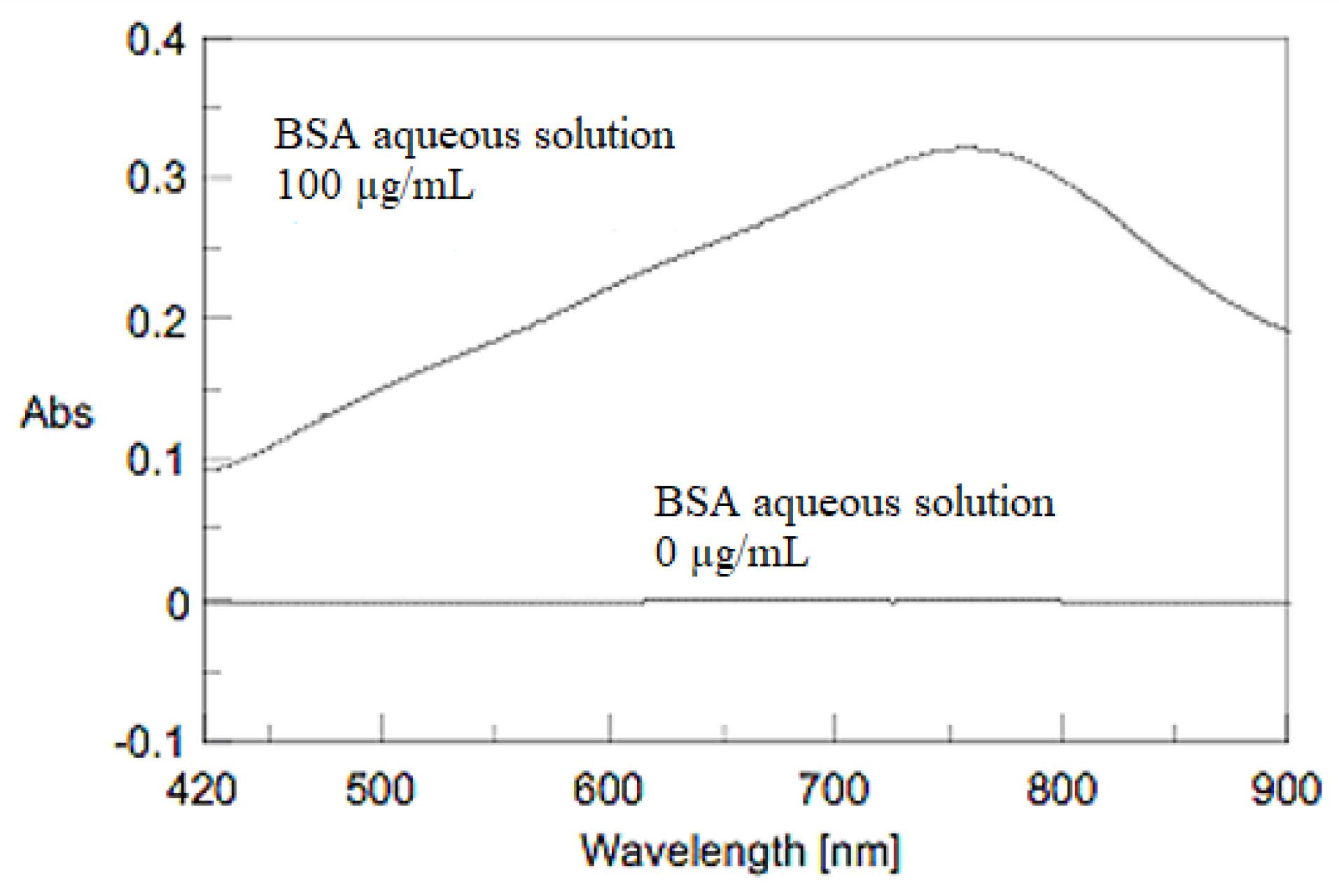
Figure 2.
Spectra of BSA aqueous solution by Lowry method
.
Spectra of BSA aqueous solution by Lowry method
Zein test
The Zein test, also known as the Zein precipitation test, is a method used to determine the anionic surfactant in a sample. It is based on the ability of anionic surfactants to form a precipitate with Zein, a protein derived from Zea mays. The Kjeldal procedure was performed using the method suggested by Beljkaš et al with slight modification.22 A Zein sample was selected from the solution containing surfactant and Zein (2 g in solid form) and then this sample was transferred to a Kjeldahl digestion flask. The procedure was performed as described in the reference. The Zein value was calculated from equation 1,15 as shown below:
Eq. (1)
In this equation, V1, V2, and V3 indicate the amount of 0.1N HCl used to titrate the unknown sample, the untreated sample (with Zein protein), and the blank sample. Also, this formula demonstrates the standard factor for 0.1N HCl as f. This number exhibits the mg amount of protein present in 100 mL of the sample.
Statistical analysis
Data analyses were conducted using GraphPad Prism-10 software. When the data did not follow a normal distribution, the Kruskal-Wallis non-parametric test was used for comparisons. For studies with normal distributions, the ANOVA test was employed. The alpha level of less than 0.05 was considered significant. In statistical analysis, P values are used to determine the significance of results, and specific symbols are often employed to convey the level of significance. A *indicates a P value less than 0.05, suggesting that the results are statistically significant at the 5% level. ** denote a P value less than 0.01, reflecting a stronger level of significance at the 1% threshold. *** signify a P value less than or equal to 0.001, indicating a very high level of statistical significance. Finally, **** represent a P value less than or equal to 0.0001, denoting an extremely high level of significance and providing robust evidence against the null hypothesis. Data point selection was justified according to the results of the statistical analysis. Sampling times were selected empirically, and subsequently justifications and discussions were based on the results of the statistical analysis. In majority of cases the significant difference indicated proper time point selection.
Results
Protein loss results
Different concentrations of BSA were analyzed by a UV-Vis spectrophotometer and the calibration curve was constructed. The equation was y = 0.0002x + 0.0282, with an R-squared value of 0.9559.
The effect of the surfactant concentration
The comparison of samples S1, S5, S15, and S19 in Figure 3 proved that by increasing the concentration of SLS at 37 ℃ and maintaining a constant pH of 7, the protein loss increased after 10 minutes and 24 hours. Based on the results exhibited in Figure 3, there is a significant difference in the amount of protein loss at numerous concentrations of surfactants when sampling was performed at 10 minutes. In contrast, based on the results of this graph, there was almost no significant difference in the amount of protein loss at diverse concentration levels when samples were taken after 24 hours. This observation can be attributed to the fact that the protein loss process not only depends on the concentration of the surfactant but also on the exposure time. Increasing SLS concentration levels to above 5 µg/mL significantly increased the hair damage within 10 minutes. Prolonging the test to 24 hours resulted in no statistically significant change in the results.
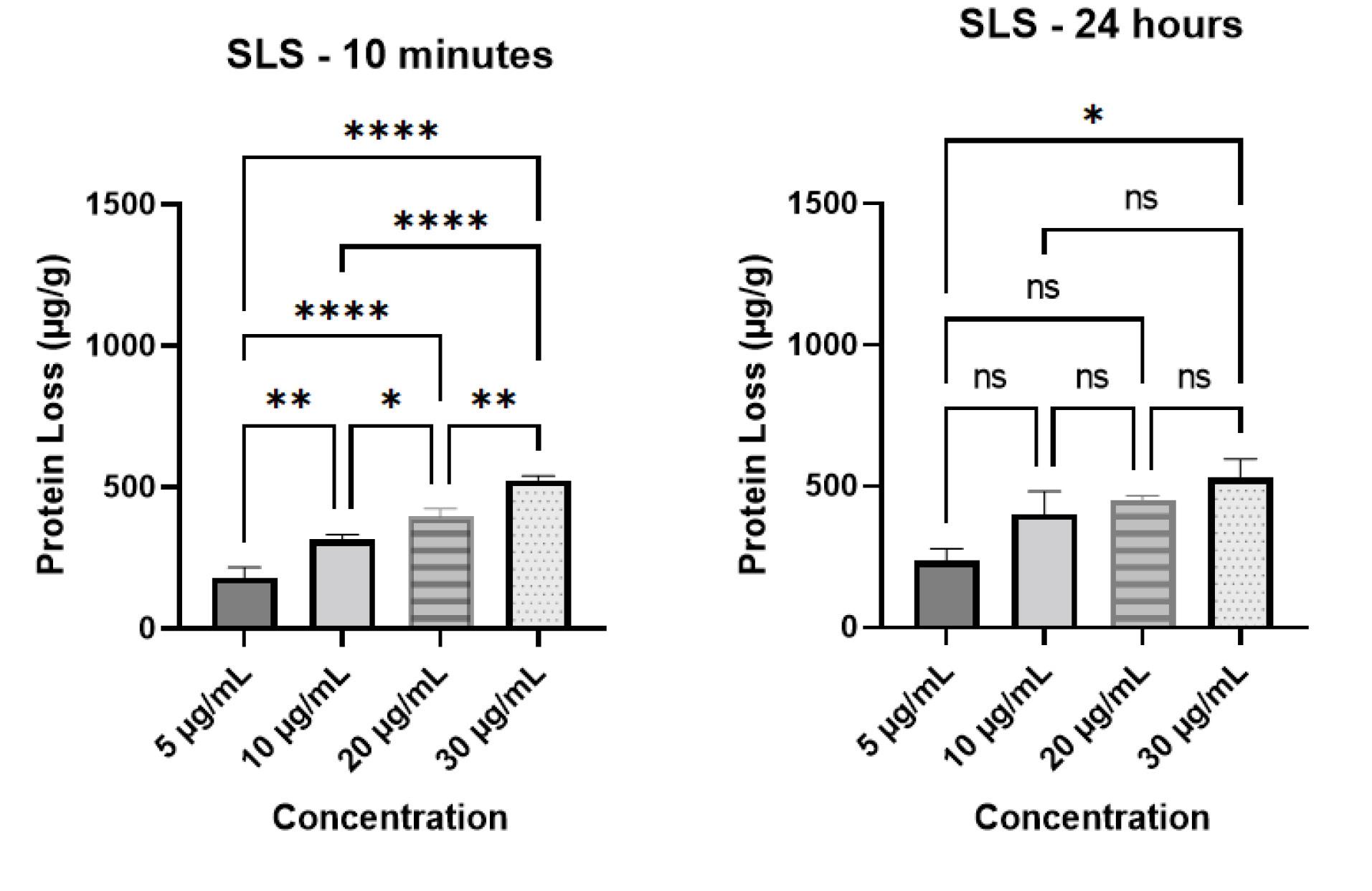
Figure 3.
The effect of SLS concentration on protein loss in 2 different timelines: 10 minutes and 24 hours (ns = nonsignificant, * P value < 0.05, ** P value < 0.01, *** P value ≤ 0.001, **** P value ≤ 0.0001)
.
The effect of SLS concentration on protein loss in 2 different timelines: 10 minutes and 24 hours (ns = nonsignificant, * P value < 0.05, ** P value < 0.01, *** P value ≤ 0.001, **** P value ≤ 0.0001)
Similar results were obtained from samples S3, S7, S17, and S21 containing different SLES concentrations applied at 37 ℃ with a pH value equal to 7. It was noted that the protein loss was notably larger in the samples with higher SLES content. Based on the results of Figure 4, generally, the surfactant SLES generally had a significant effect on the amount of protein loss if it was in contact with hair strands for 24 hours. There was a significant difference in the amount of protein loss at various concentrations when sampling was performed after 10 minutes, with the only exception being the samples of 10 µg/mL and 5 µg/mL, which showed no significant change. From these observations, it can be concluded that increasing SLES concentration damaged the hair strands significantly after 10 minutes and 24 hours.
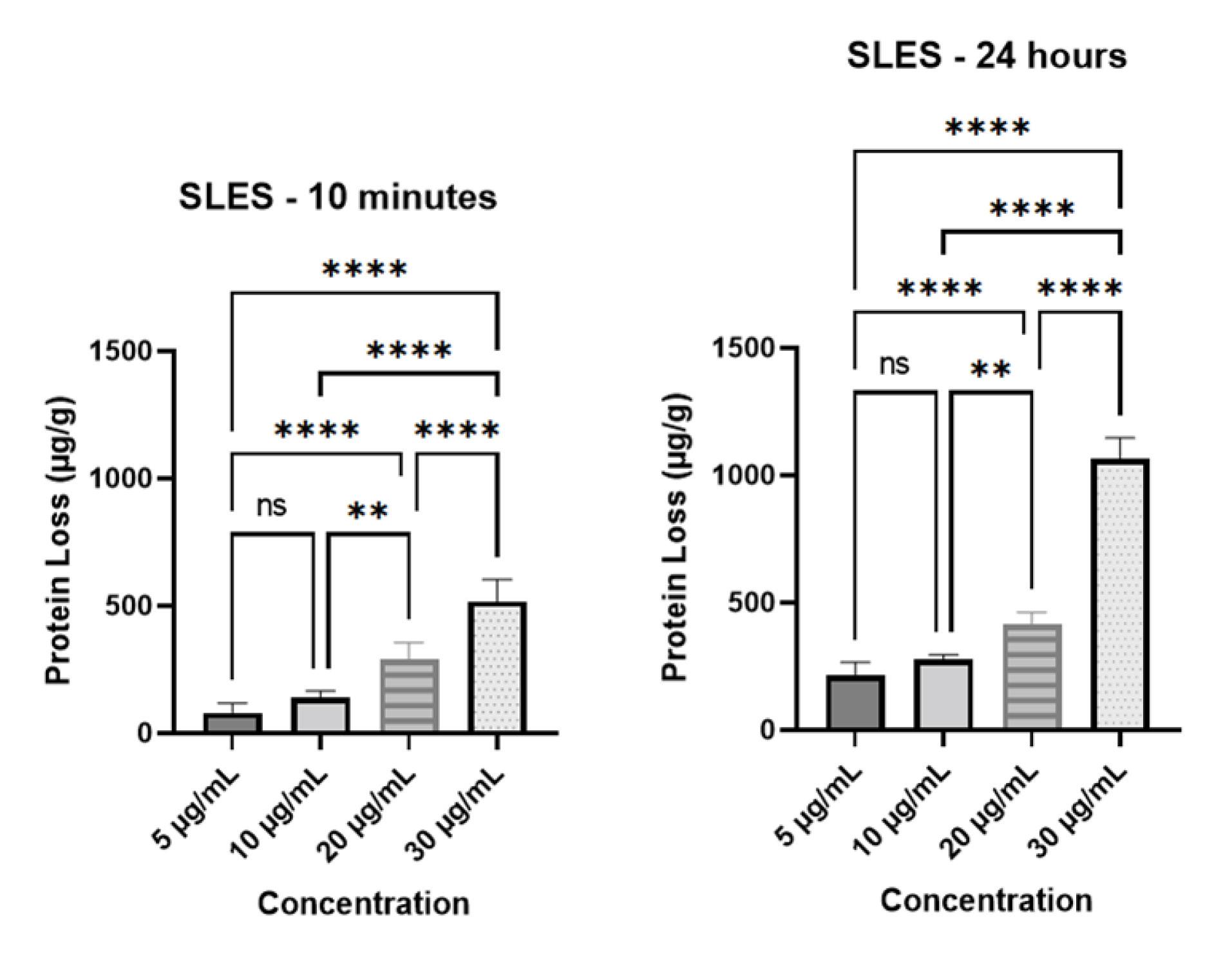
Figure 4.
The effect of SLES concentration on protein loss in 2 different sampling times: 10 minutes and 24 hours (ns = nonsignificant, * P value < 0.05, ** P value < 0.01, *** P value ≤ 0.001, **** P value ≤ 0.0001)
.
The effect of SLES concentration on protein loss in 2 different sampling times: 10 minutes and 24 hours (ns = nonsignificant, * P value < 0.05, ** P value < 0.01, *** P value ≤ 0.001, **** P value ≤ 0.0001)
The effect of exposure time
The effect of sampling time at different concentrations of the surfactant is illustrated in Figure 5. It is shown that a low and a high sampling time had no significant change in protein loss results for hair samples treated with SLS in different concentrations. This is in contrast to SLES samples in which hair exposure to SLES at different concentrations for 10 minutes and 24 hours had a significant effect on protein loss and also hair damage. This finding showed the importance of controlling the remaining SLES and SLS on hair as a product residue or in leave-on products. Despite SLES, SLS damaged the hair rapidly and the damage remained constant even after 24 hours.
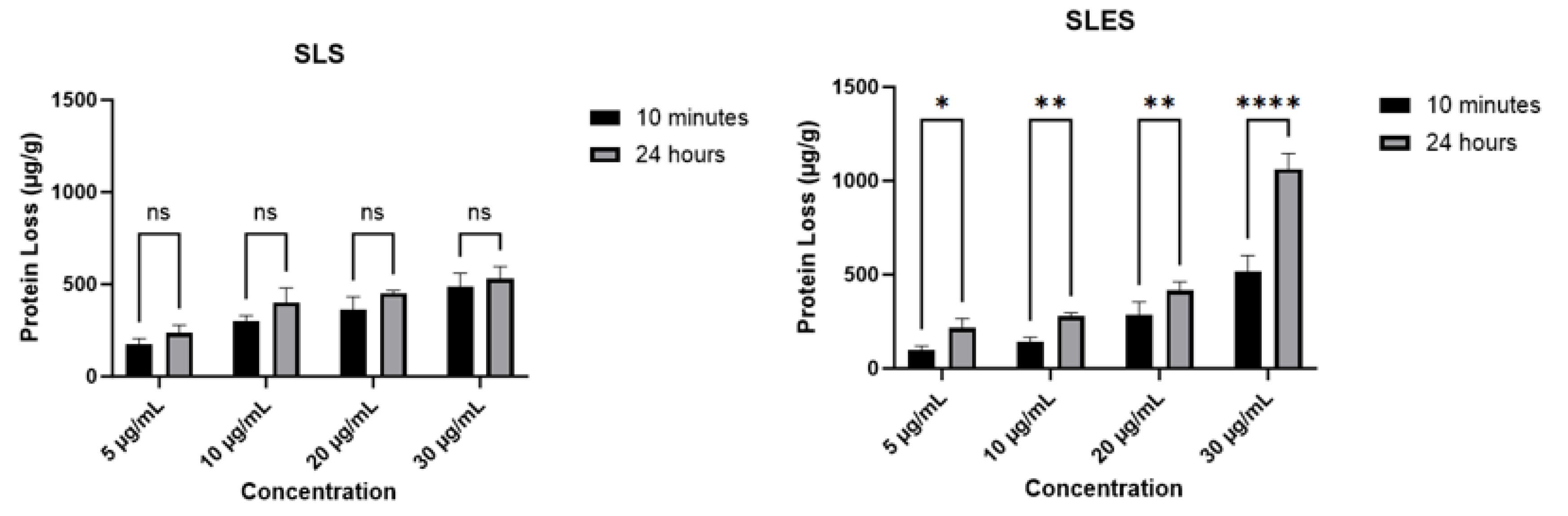
Figure 5.
The effect of time on protein loss at different concentrations of SLS and SLES (ns = nonsignificant, * P value < 0.05, ** P value < 0.01, *** P value ≤ 0.001, **** P value ≤ 0.0001)
.
The effect of time on protein loss at different concentrations of SLS and SLES (ns = nonsignificant, * P value < 0.05, ** P value < 0.01, *** P value ≤ 0.001, **** P value ≤ 0.0001)
The effect of pH value
In Figure 6, the protein loss was investigated at different pH (5, 7, and 8) levels for each surfactant. The temperature (37 ℃), concentration (10%), and time (10 minutes) remained constant. The comparisons were made using a T-test. The results showed that the alkaline environment promoted protein loss.
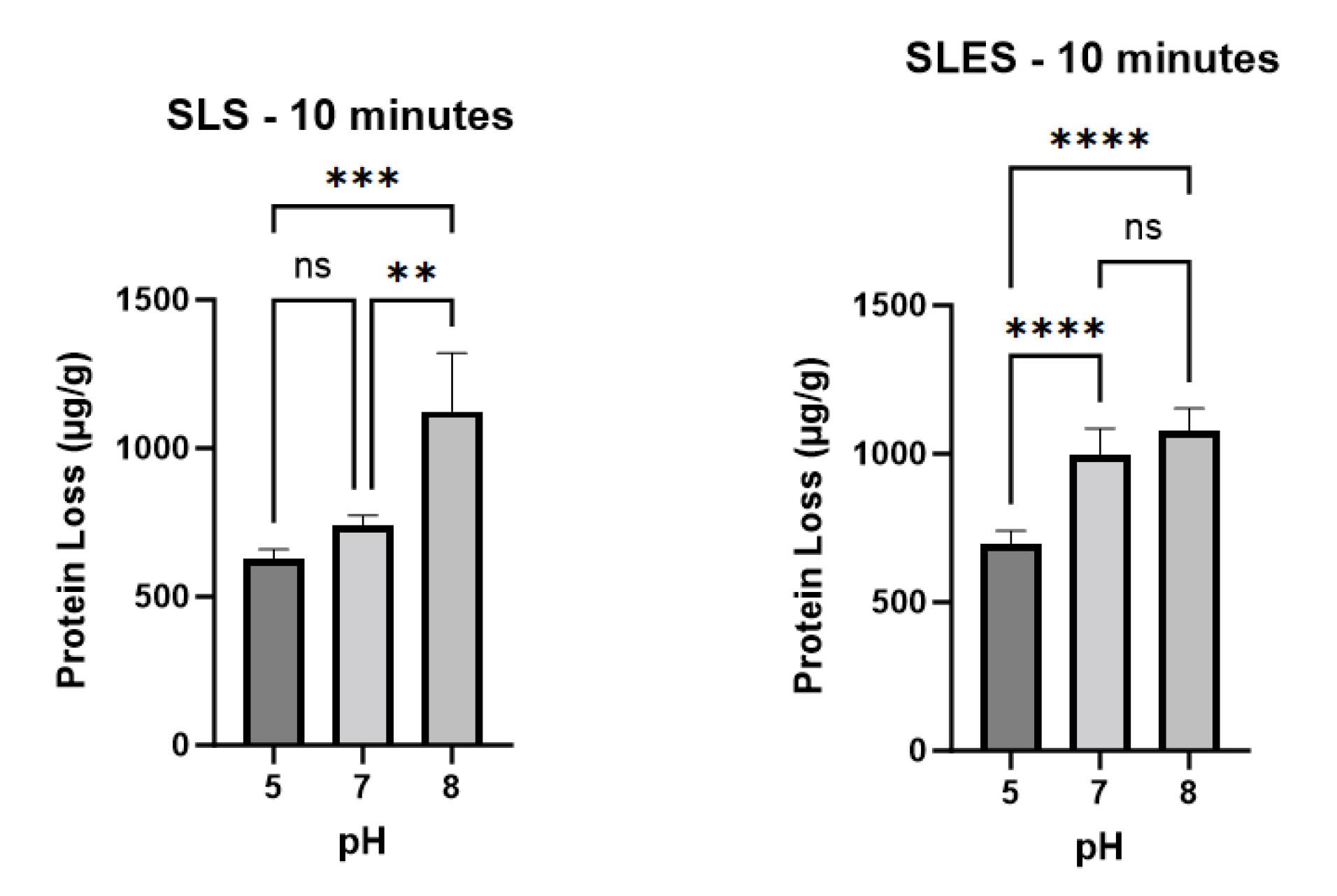
Figure 6.
The effect of pH on protein loss in hair samples treated with 10% SLES or SLS at 37 ℃ for 10 minutes (ns = nonsignificant, * P value < 0.05, ** P value < 0.01, *** P value ≤ 0.001, **** P value ≤ 0.0001)
.
The effect of pH on protein loss in hair samples treated with 10% SLES or SLS at 37 ℃ for 10 minutes (ns = nonsignificant, * P value < 0.05, ** P value < 0.01, *** P value ≤ 0.001, **** P value ≤ 0.0001)
The effect of surfactant type
In Figure 7, the protein loss was compared at numerous concentrations of each surfactant in constant conditions (pH = 7, temperature = 37 ℃, time = 10 minutes or 24 hours). It can be concluded that there was mostly no notable difference between samples treated with SLES (S3, S17, and S21) and SLS (S1, S15, and S19) when sampling was performed at 10 minutes and 24 hours of exposure. Some exceptions can be seen in this conclusion. There was a significant difference in protein loss levels in certain scenarios.
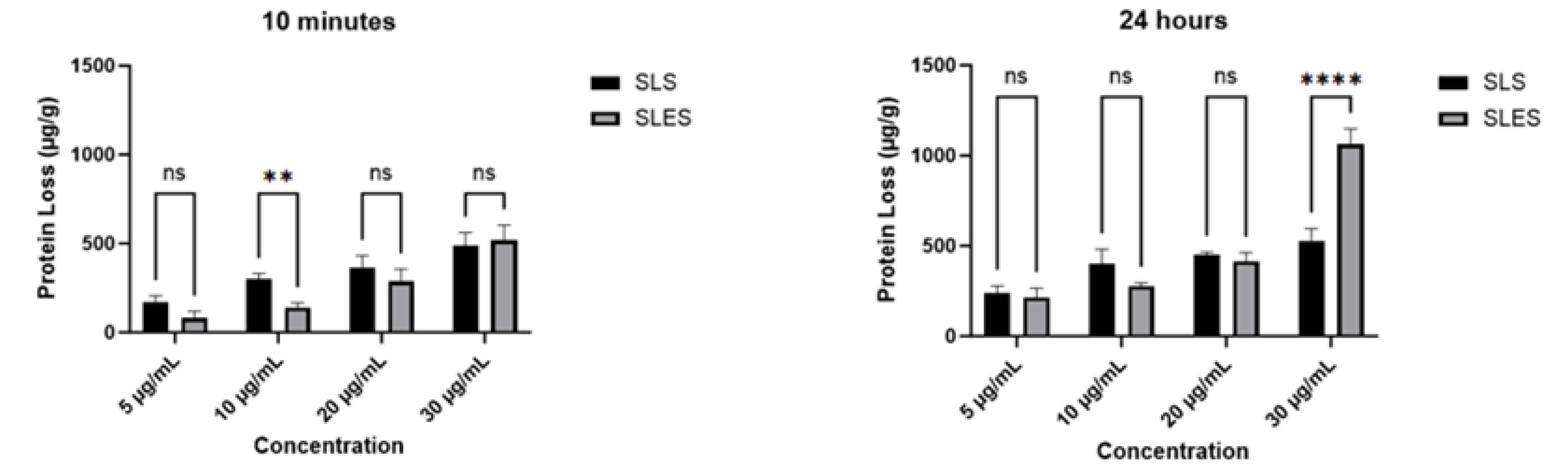
Figure 7.
The effect of surfactant type on protein loss at different concentrations (ns = nonsignificant, * P value < 0.05, ** P value < 0.01, *** P value ≤ 0.001, **** P value ≤ 0.0001)
.
The effect of surfactant type on protein loss at different concentrations (ns = nonsignificant, * P value < 0.05, ** P value < 0.01, *** P value ≤ 0.001, **** P value ≤ 0.0001)
As mentioned, protein loss was quantitatively measured using the Lowry method after specified exposure conditions. Absorbance values at 750 nm were converted to protein concentration (μg/mL) using a standard calibration curve. Data were analyzed in GraphPad Prism software (version 10.0). For statistically significant different results it can be concluded as follow:
At the 10-minute exposure with 10 μg/mL surfactant concentration:
-
Mean protein loss for SLS measured 313.56 ± 18.66 μg/g (mean ± SD, n = 3)
-
Mean protein loss for SLES measured 140.03 ± 25.58 μg/g (mean ± SD, n = 3)
This difference was statistically significant (P = 0.0012), confirming SLS induced greater damage. Conversely, at 24-hour exposure with 30 μg/mL surfactant concentration:
The difference was highly significant (P < 0.0001), demonstrating SLES caused greater damage.
The effect of temperature
The effect of temperature was assessed in each surfactant type and is illustrated in Figure 8. The results demonstrated that by increasing temperature, the protein loss level was boosted in both SLS and SLES samples. The temperature of 42 ℃ simulates the conditions of a warm shower or bath, which is a common scenario for shampooing hair.23 At this temperature, the hair cuticle is more open and susceptible to damage from the harsh surfactants and chemicals in the shampoo. By testing at this temperature, researchers can assess how well the shampoo performs in real-world conditions and determine its potential for causing damage to the hair. It can be concluded that there is more significant hair damage in SLES samples at low and high temperatures compared to SLS samples.
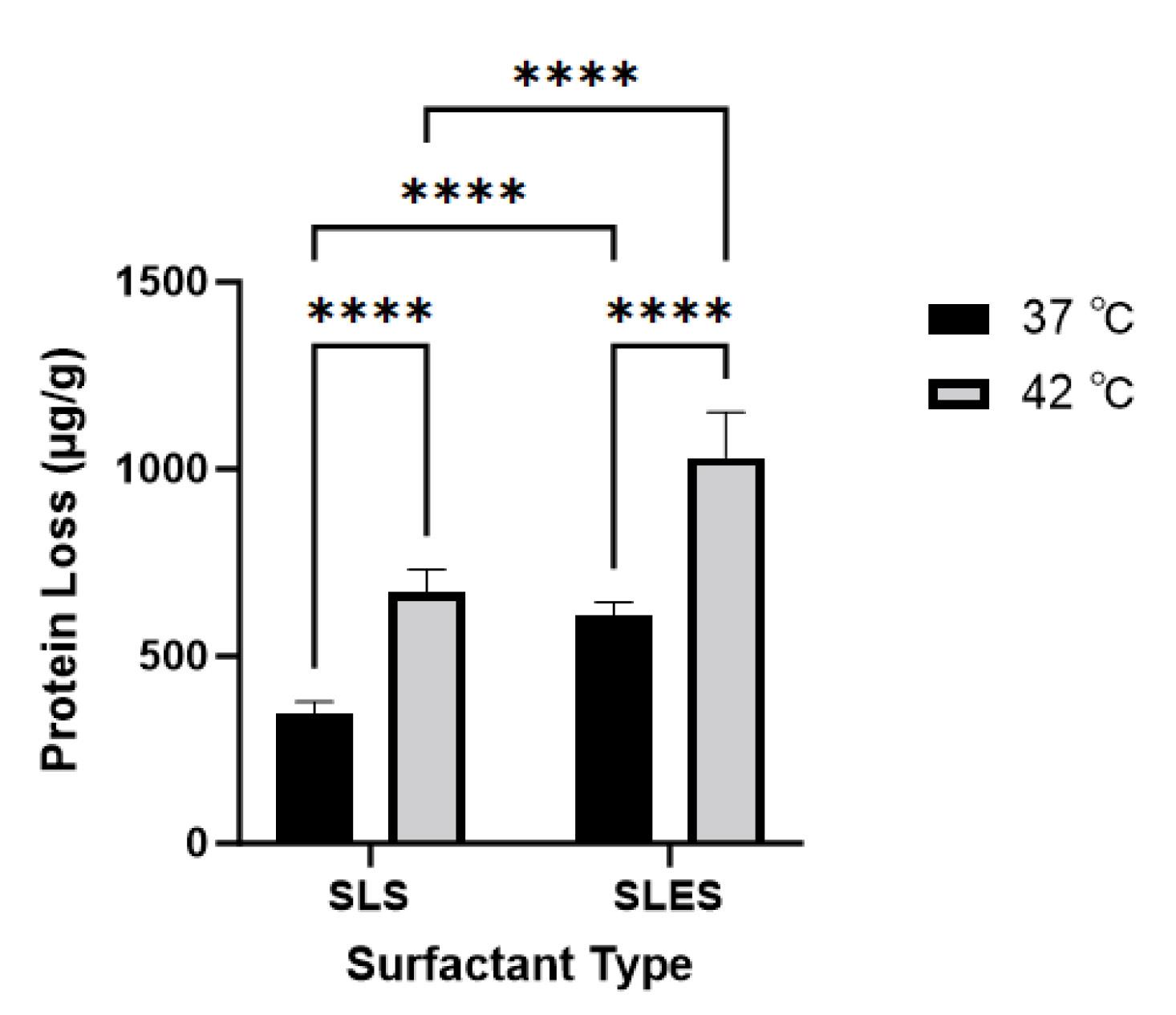
Figure 8.
The effect of temperature elevation on protein loss in different surfactants (ns = nonsignificant, * P value < 0.05, ** P value < 0.01, *** P value ≤ 0.001, **** P value ≤ 0.0001)
.
The effect of temperature elevation on protein loss in different surfactants (ns = nonsignificant, * P value < 0.05, ** P value < 0.01, *** P value ≤ 0.001, **** P value ≤ 0.0001)
Correlation between the Lowry method and the Zein test
Figure 9 displays the correlation between the results of the Lowry test and the Zein test on samples exposed to 5, 10, 20, and 30 µg/mL of SLS and SLES surfactants at two times with constant temperature and pH. According to Figure 9, there is a significant correlation between the amount of protein measured by the Lowry test and the Zein test in exposure time and surfactants. However, the best agreement between the Lowry test’s results and the Zein test is seen after 10 minutes of exposure in both surfactants (r2 = 0.94 for SLS and 0.96 for SLES), the agreement between results after 24 hours of exposure is also acceptable (r2 = 0.82 for SLS and 0.8267 for SLES). The findings proved the efficacy of a known test on Zea mays protein to conclude the hair product’s damaging ability by directly comparing it to protein loss results of an accurate and precise Lowry method.
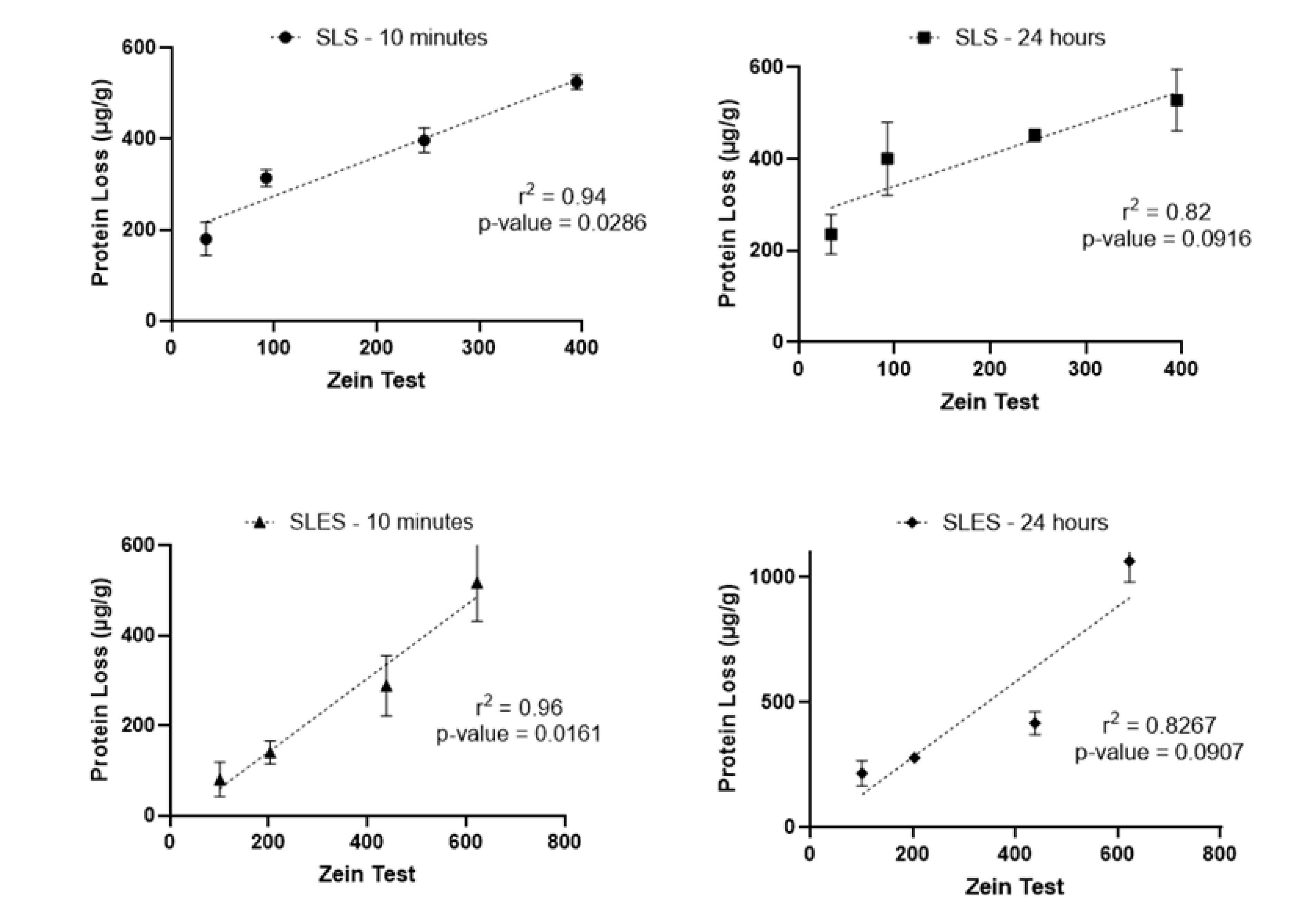
Figure 9.
The correlation between the results of the Lowry test and the Zein test at 10 minutes and 24 hours
.
The correlation between the results of the Lowry test and the Zein test at 10 minutes and 24 hours
Discussion
Hair fibers comprise a dehydrated outer layer called the cuticle, a middle layer called the cortex, and occasionally an inner layer called the medulla. The cuticle, a protective layer surrounding the cortex, consists of 6 to 8 layers. The cortex contains cells and structures called cell membrane complexes. The frequency of the medulla is higher in the thick hair of Asians compared to Caucasians, and it is also more common in beards than in scalp hair.24
Shampoos contain surfactants that eliminate lipids while washing skin and hair. The effectiveness of anionic surfactants in lipid removal from hair depends on various factors such as surfactant structure, concentration, agitation, temperature, time, and others. Surfactants are cleaning agents that work by reducing the bonding forces that attach impurities and residues to the hair. 25 Surfactants are divided into four main groups (anionic, cationic, amphoteric, and non-ionic) based on the electrical charge of the polar end. The main cleaning agents are typically anionic, such as SLS and SLES. While anionic surfactants are effective at cleaning, they can also damage the hair strands.26
The scientific studies have highlighted potential concerns regarding the effects of SLS and SLES on human health. One of the main problems with SLS is its potential to be contaminated with a known carcinogen called 1,4-dioxane. 1,4-dioxane is a byproduct of the ethoxylation process used to make SLS and has been classified as a probable human carcinogen by the International Agency for Research on Cancer (IARC). Regarding the ethoxylation process, SLES undergoes an additional step to remove residual dioxane. This extra purification step helps to reduce the risk of dioxane contamination in SLES compared to SLS.27 Symanzik et al demonstrated that regarding the SLES, it is not surprising that there is a lack of available data on its allergic potential, similar to its closely related SLS. However, when considering its irritant potential, SLES can be mild compared to other surfactants like SLS. It is reasonable to assume that modern skin cleansers utilizing SLES instead of stronger surfactants like SLS have shown improvements in minimizing skin barrier damage compared to previous formulations.28 Kaushik et al used 15% SLES to predict the hair breakage model. The findings verified that as the number of SLES wash cycles increased, the count of breakages also increased, but eventually reached a plateau after approximately 15 cycles.29 Previous studies have shown that these surfactants can cause hair dryness, frizz, and even breakage.30 The novelty of the current work over these researches is the effects of varying pH levels and temperatures were specifically examined on hair damage caused by SLS and SLES which helps clarify how these environmental factors can influence the efficacy and potential harm of these surfactants.
Even though shampoos and conditioners containing surfactants can strip away some lipids during hair cleansing, not all lipids are completely removed.31 The previous belief was that hair pores formed as a result of oxidative damage, heat, and disease. However, in 2023, Song et al revealed for the first time that pores formed when hair is washed with a surfactant. To investigate the effects of surfactants on hair structure, internal images of the hair were examined using an optical microscope, with changes being recorded over multiple washing cycles. Pores, marked by a decrease in internal density, were observed to develop following up to four washes but ceased forming after the fourth wash. This suggested that the bonding strength in the region where pores occurred was relatively low. They proposed that the substances lost in the pores were lipids (squalene and wax ester) and proteins (especially phenylalanine). To inhibit this phenomenon, hydrogenated caster oil and sebacic acid were used for cuticle-sealing.32 Therefore, it could be concluded that surfactants like SLS and SLES disrupt the lipid-protein matrix of hair, leading to increased porosity and loss of structural integrity. They bind to hair proteins, which may cause denaturation and a reduction in tensile strength. The interaction between surfactants and hair fibers alters the natural lipid barrier, crucial for maintaining hair moisture and overall health.
While increasing surfactant concentration (5–30% w/v) and temperature (37–42 °C) universally enhanced protein loss (P < 0.0001), the time-independence of SLS-mediated damage reflects its rapid saturation kinetics. This phenomenon arises from SLS’s lower molecular weight (288.38 g/mol vs. SLES’s 420.5 g/mol) and linear alkyl chain, enabling rapid penetration through cuticle layers to reach the cortex within minutes.33 Notably, SLES exhibited time-dependent damage (2.05-fold increase with 30% w/v at 24 h; P < 0.0001) due to its lower penetration rate and also ethylene oxide groups facilitating progressive oxidative cleavage of disulfide bonds.34
pH levels and temperature variations can significantly influence the chemical reactions and interactions between hair fibers and surfactants, potentially altering the extent and nature of hair damage. Studies have also highlighted the importance of maintaining the pH balance in hair care products. Zamani et al investigated the impact of extreme temperature, pH, and moisture levels on human hair, as well as evaluated the characteristics of healthy hair such as smoothness, color, and shine. In the mentioned study, hair samples were collected from a female student and subjected to various conditions including extreme cold and high temperatures, acidic and basic pH levels, and the application of coconut oil. Observations were made over five days, twice daily, using a dissecting microscope to assess the effects on hair health. The study found that exposure to excessive amounts of virgin coconut oil, high temperatures (100°C), and acidic conditions (pH 3) resulted in hair damage, highlighting the importance of maintaining a pH between 5 and 7 for healthy hair. In that research, the effects of surfactants like SLS and SLES on protein loss in hair were not examined and the main focus was on the impact of extreme temperature, pH, and moisture levels.35 Therefore, direct comparative data on SLS and SLES-induced hair damage at different pH levels and temperatures is another novelty of the recent study, which, to our knowledge, has not been systematically investigated in the literature.
To evaluate the effect of temperature on hair damage, A study was conducted by de Cássia Comis Wagner and Joekes on the impact of SLS on protein loss, examining three types of human hair subjected to different treatments at varying temperatures (25 ℃, 40 ℃, and 70 ℃). The results showed that when hair was rubbed with SLS solution, protein loss was significantly higher compared to water, and immersion in SLS solution also led to greater protein loss compared to water. Moreover, protein loss was high in increased temperatures.36 Table 2 illustrates the methodologies and results of previous studies about the impact of temperature on hair structure.
Table 2.
Comparing the methodologies of studies on the effect of temperature on hair structure
|
Temperature (℃)
|
Hair damage- evaluating method
|
Results
|
Difference with current research
|
| SLS exposure at 25, 40, and 70 ℃ |
Protein loss |
By increasing temperature, protein loss was increased. |
Conducting on a 3 hair types including single head Caucasian dark-brown hair tress, the root-end region cut from a blended Caucasian dark-brown hair tress, and a Caucasian blended blond hair tress |
| 0, 27, and 100 ℃ |
Analyzing the smoothness, color, and shine by using a dissecting microscope |
At 100 ℃ hair becomes hard, dry, and brittle.
Hair color fades from brown to auburn |
Without using surfactant
Broad range of temperature |
In a recent study, alkaline environments were found to promote higher levels of protein loss. Gavazzoni Dias et al conducted a study examining the mode of action of low-pH shampoo on hair shaft health and analyzed the pH levels of 123 shampoos from international brands. The study found that an alkaline pH could potentially damage the hair cuticle and cause fiber breakage due to increased friction between fibers. Lower pH shampoos may help reduce frizz by minimizing static electricity on the hair fiber surface. Interestingly, salon shampoos had a higher percentage of pH ≤ 5.0 compared to popular brand shampoos. Pediatric shampoos typically had a pH of 7.0 to align with the “no-tear” concept, indicating that there was no standardized value for final shampoo pH levels.37
Goshiyama et al conducted a study on acid straightener products to examine the impact of different pH values on hair shaft properties. Despite the Brazilian Health Regulatory Agency (ANVISA) setting the safe pH value for these products above 2.0, many products on the market have lower pH values. The researchers analyzed the effects of pH value of 1.0 and pH equal to 2.0 formulations on hair properties using various tests. The study found that tresses treated with a pH value equal to 1.0 formulation showed better straightening results compared to those treated with a pH equal to 2.0, as evidenced by a 59.4% improvement in the combing test. However, the tensile strength of hair treated with pH 1.0 decreased by 16.0%, whereas in pH = 2.0 the strength was only decreased by 9.0%. Additionally, the tryptophan content was lower in tresses treated with pH 1.0. Overall, the researchers concluded that pH value significantly influenced hair shaft properties, with pH 1.0 causing more modifications than pH 2.0.38 Table 3 compares the details of studies about the effect of pH on hair damage with the recent research.
Table 3.
Comparison of the pH effect on hair in various studies
|
pH value
|
Hair damage- evaluating method
|
Results
|
Difference with current research
|
Reference
|
| 3, 7, and 9 |
Analyzing the smoothness, color, and shine by using a dissecting microscope |
1. In acidic and alkaline pH, hair became shinier.
2. The hair became more curlier, smoother, and thin in alkaline pH.
3. Hair color changed to dark brown at acidic and alkaline pH. |
Without using surfactant |
35
|
| 1 and 2 |
Tensile strength by MTT175 Diastron
Colorimetric analyses
HPLC for determination of tryptophan |
1. Decrease in tensile strength by decreasing pH value
2. No color change
3. less tryptophan content in pH = 1 |
Using different surfactant (Polyquaternium‐67) |
38
|
Tarun et al worked on research to evaluate the pH levels of various bathing soaps and shampoos available in the market. The pH of normal healthy skin typically falls between 5.4 and 5.9, with a balanced bacterial flora. However, the use of high-pH soaps can disrupt the skin’s pH balance, leading to increased dehydration, irritation, and changes in bacterial flora. Despite this, many products do not disclose their pH levels. The study collected samples from local shops, coded them, and measured their pH using a pH meter. Results showed that most soaps had a pH between 9-10, while shampoos fell within the 6-7 range. This suggests that commonly used soaps and shampoos may not align with the normal pH levels of skin and hair. The researchers recommended considering pH levels when suggesting products for individuals with sensitive or acne-prone skin and urged manufacturers to prioritize pH levels in their formulations for more skin and hair-friendly products.39 The results of these studies are consistent with current research, which showed that pH plays a crucial role in protein loss.
Colorimetric methods have revolutionized the field of protein analysis, offering accurate and reliable measurements through the detection of color changes resulting from chemical reactions.40 Pires-Oliveira and Joekes proposed the use of UV–vis spectra as an alternative to the Lowry method for quantifying hair damage caused by surfactants. They immersed hair samples in a 2.5% aqueous solution of surfactants including SLS, SLES, cocamidopropyl betaine (CAPB; zwitterionic surfactant), and coco glucoside (Gluc; nonionic surfactant) at 38°C with constant shaking, resembling shower conditions. The UV-vis spectra (490 - 650 nm) were recorded as the solutions became colored over 64 hours. It was found that the intensity of solution color varies with the charge density of the surfactants arranged in decreasing order as follows: anionic, zwitterionic, and non-ionic.41
In Table 4, the current research is compared with similar existing research.
Table 4.
Comparison of the method with other approaches
|
Surfactant
|
Concentration
|
Hair damage- evaluating method
|
Result
|
Difference with recent work
|
Reference
|
| SLES |
15% |
Diastron Combing Force Set-Up for Smoothness Force and
Diaston MTT 175 Hair Tensile tester |
As SLES wash cycles increase, the predicted hair breakage count rises; however, this trend plateaus after approximately 15 cycles. |
Using only one concentration |
29
|
| SLS, SLES, CAPB, Gluc |
2.5% |
UV-vis spectroscopy |
Hair damage varies with the charge density of the surfactants. |
Using different surfactants
2) Long exposure time (64h) |
41
|
Generally, the impact of surfactants, temperature, and pH levels on hair health is significant and should be considered when formulating hair care products to ensure they are effective and safe for consumers. The simultaneous analysis of protein loss and Zein numbers on the same hair samples is a novel approach. It allows us to explore the relationship between these two measures of hair health, offering a more comprehensive understanding of damage that has yet to be addressed in previous investigations.
The following recommendations are related to the formulation of hair care products. Based on the research findings, it is advised to utilize SLS at a concentration of 5% and SLES at 10% to minimize hair damage in susceptible hair types. The pH of hair care formulations plays a critical role in hair health. For products containing SLS and SLES, it is suggested to maintain a pH range of 5-7, which aligns with the natural pH of hair and scalp, thereby reducing the risk of damage and irritation. The research indicates that formulations should be used below 37°C. Higher temperatures can exacerbate the damaging effects of surfactants on hair, potentially leading to greater cuticle damage and protein loss.
To ensure the safety and efficacy of hair care products formulated with SLS and SLES, it is recommended to utilize both the Lowry method and Zein test in parallel to evaluate the protein loss and hair damage at varying concentrations of SLS and SLES. To enhance quality control in the manufacturing process, regular monitoring of pH and concentration verification are highly suggested. By integrating these recommendations into their product development processes, manufacturers can create safer and more effective hair care products that align with our findings.
While recent research provides valuable insights into the effects of surfactants like SLS and SLES on hair damage under varying pH levels and temperatures, several limitations should be acknowledged. First, the current study focused solely on the anionic surfactants SLS and SLES. The potential hair damage induced by other classes of surfactants, such as cationic, amphoteric, and non-ionic surfactants was not evaluated. Second, the research was conducted using a specific hair type, which may limit the generalizability of the findings. Different hair types (e.g., straight, curly, coarse, fine) possess distinct structural and chemical properties that could influence their susceptibility to surfactant-induced damage. Third, a limited range of temperature and pH levels were utilized. Expanding this range (for instance, evaluating temperatures up to 100 °C and a wider variety of pH levels) could yield more nuanced insights into the extent of hair damage caused by surfactants under extreme conditions. Finally, this study employed specific analytical methods to assess hair damage. However, a variety of complementary techniques were not used such as amino acid composition analysis (particularly cysteine content), mechanical properties assessment, scanning electron microscopy, surface wettability measurements, and microfluorometry.
Future research directions should consider the implications of varying hair types on surfactant-induced damage, as the current study is limited to a specific set of hair bundles. The examination of repeated exposure to lower concentrations of surfactants, which are frequently utilized in consumer products, is essential to understand the cumulative effects of such exposures and their relevance to typical user experiences. Furthermore, investigating a wider range of temperatures could elucidate the impact of thermal fluctuations in for example brushing process on hair health. Finally, the incorporation of advanced imaging techniques, such as microscopic analysis and qualitative methods like attenuated total reflectance spectroscopy and Raman confocal microscopy, would enhance the understanding of the effects of surfactants on hair at a more comprehensive level.
Conclusion
This study showed that the results of the Lowry method for evaluating damage to hair strands were in good agreement with the well-known Zein test, which is based on a plant-derived protein. Lowry method uses excised human hair samples while the Zein test uses the Zea mays protein to predict the hair damage ability of the surfactants in hair products such as shampoos. In this study, it was shown that in a neutral environment and at 37 ℃, if the exposure of the surfactant to the hair was for 10 minutes (usually equivalent to the duration of bathing), the SLES surfactant caused less damage to the hair follicle. However, if the pH of the sample solution becomes more alkaline, the duration of exposure increases, or the temperature of the solution reaches 37 ℃ or above, the SLES surfactant has a greater ability to damage hair follicles compared to SLS. Even the residues of SLES on hair strands may damage hair proteins more significantly compared to SLS.
Overall, the study provided valuable insights into the factors that influence protein loss in protein analysis methods. The findings of this study contribute to a better understanding of the effects of common hair care ingredients on the structural integrity of the hair, leading to the development of safer and more effective hair care products in the future.
Competing Interests
The authors declare no conflict of interest.
Data Availability Statement
Data will be made available on request.
Ethical Approval
This study was approved by the ethical committee of Tabriz University of Medical Sciences (Registration code: IR.TBZMED.REC.1400.295).
Acknowledgements
This paper was extracted from a Pharm. D thesis no. 4328 submitted to the Faculty of Pharmacy, Tabriz University of Medical Sciences and financially supported.
References
- Rogers GE. Known and unknown features of hair cuticle structure: a brief review. Cosmetics 2019; 6(2):32. doi: 10.3390/cosmetics6020032 [Crossref] [ Google Scholar]
- Yang W, Yu Y, Ritchie RO, Meyers MA. On the strength of hair across species. Matter 2020; 2(1):136-49. doi: 10.1016/j.matt.2019.09.019 [Crossref] [ Google Scholar]
- Leerunyakul K, Suchonwanit P. Asian hair: a review of structures, properties, and distinctive disorders. Clin Cosmet Investig Dermatol 2020; 13:309-18. doi: 10.2147/ccid.S247390 [Crossref] [ Google Scholar]
- Wagner EL, Shin JB. Mechanisms of hair cell damage and repair. Trends Neurosci 2019; 42(6):414-24. doi: 10.1016/j.tins.2019.03.006 [Crossref] [ Google Scholar]
- Lanjewar A, Maurya S, Sharma D, Gaur A. Review on hair problem and its solution. J Drug Deliv Ther 2020; 10(3S):322-9. doi: 10.22270/jddt.v10i3-s.4066 [Crossref] [ Google Scholar]
- Asio JR, Garcia JS, Antonatos C, Sevilla-Nastor JB, Trinidad LC. Sodium lauryl sulfate and its potential impacts on organisms and the environment: a thematic analysis. Emerg Contam 2023; 9(1):100205. doi: 10.1016/j.emcon.2023.100205 [Crossref] [ Google Scholar]
- Mei-Hsia Chan M, Tan LS, Leow YH, Goon AT, Goh CL. Comparison of irritancy potential of sodium lauryl sulfate-free aqueous cream to other moisturizers: an intraindividual skin occlusive study. J Clin Aesthet Dermatol 2019; 12(7):52-8. [ Google Scholar]
- Javadi A, Dowlati S, Shourni S, Miller R, Kraume M, Kopka K. Experimental techniques to study protein-surfactant interactions: new insights into competitive adsorptions via drop subphase and interface exchange. Adv Colloid Interface Sci 2022; 301:102601. doi: 10.1016/j.cis.2022.102601 [Crossref] [ Google Scholar]
- Weiand E, Rodriguez-Ropero F, Roiter Y, Koenig PH, Angioletti-Uberti S, Dini D. Effects of surfactant adsorption on the wettability and friction of biomimetic surfaces. Phys Chem Chem Phys 2023; 25(33):21916-34. doi: 10.1039/d3cp02546b [Crossref] [ Google Scholar]
- Adav SS, Ng KW. Recent omics advances in hair aging biology and hair biomarkers analysis. Ageing Res Rev 2023; 91:102041. doi: 10.1016/j.arr.2023.102041 [Crossref] [ Google Scholar]
- Fatma I, Sharma V, Thakur RC, Kumar A. Current trends in protein-surfactant interactions: a review. J Mol Liq 2021; 341:117344. doi: 10.1016/j.molliq.2021.117344 [Crossref] [ Google Scholar]
- Gargano EM, Sell S, Langhoff S, Schmidt CU, Wierlacher S. Development and validation of a method for simultaneous analysis of hair underivatized amino acids and damage biomarkers, using liquid chromatography-tandem mass spectrometry. Talanta 2021; 233:122584. doi: 10.1016/j.talanta.2021.122584 [Crossref] [ Google Scholar]
-
Goldring JPD. Measuring protein concentration with absorbance, Lowry, Bradford Coomassie Blue, or the smith bicinchoninic acid assay before electrophoresis. In: Kurien BT, Scofield RH, eds. Electrophoretic Separation of Proteins: Methods and Protocols. New York: Springer; 2019. p. 31-9. doi: 10.1007/978-1-4939-8793-1_3.
- Kaur C, Singh A, Sethi M, Devi V, Chaudhary DP, Phagna RK. Optimization of protein quality assay in normal, opaque-2, and quality protein maize. Front Sustain Food Syst 2022; 6:743019. doi: 10.3389/fsufs.2022.743019 [Crossref] [ Google Scholar]
- Iran National Standards Organization (INSO). Shampoo-Specifications and Test Methods 2018; Available from: https://www.inso.gov.ir/.
- Bujak T, Zagórska-Dziok M, Nizioł-Łukaszewska Z. Complexes of ectoine with the anionic surfactants as active ingredients of cleansing cosmetics with reduced irritating potential. Molecules 2020; 25(6):1433. doi: 10.3390/molecules25061433 [Crossref] [ Google Scholar]
- Aguirre J. The Kjeldahl Method: 140 Years. Springer Nature; 2023.
- Sharifi N, Hamedeyazdan S, Shokri J, Monajjemzadeh F. Argan oil as a pretreatment of human hair before exposure to oxidative damage: attenuated total reflectance and protein loss studies. J Cosmet Dermatol 2022; 21(10):5010-7. doi: 10.1111/jocd.14885 [Crossref] [ Google Scholar]
- Bondi CA, Marks JL, Wroblewski LB, Raatikainen HS, Lenox SR, Gebhardt KE. Human and environmental toxicity of sodium lauryl sulfate (SLS): evidence for safe use in household cleaning products. Environ Health Insights 2015; 9:27-32. doi: 10.4137/ehi.S31765 [Crossref] [ Google Scholar]
- Sandhu SS, Robbins CR. A simple and sensitive technique, based on protein loss measurements, to assess surface damage to human hair. J Soc Cosmet Chem 1993; 44(3):163-75. [ Google Scholar]
-
Waterborg JH. The Lowry method for protein quantitation. In: Walker JM, ed. The Protein Protocols Handbook. Totowa, NJ: Humana Press; 2009. p. 7-10. doi: 10.1007/978-1-59745-198-7_2.
- Beljkaš B, Matić J, Milovanović I, Jovanov P, Mišan A, Šarić L. Rapid method for determination of protein content in cereals and oilseeds: validation, measurement uncertainty and comparison with the Kjeldahl method. Accredit Qual Assur 2010; 15(10):555-61. doi: 10.1007/s00769-010-0677-6 [Crossref] [ Google Scholar]
- Clarke JA, Robbins CL, Schroff B. Selective removal of sebum components from hair II: effect of temperature. J Soc Cosmet Chem 1990; 41:335-45. [ Google Scholar]
- Robbins CR. Chemical and Physical Behavior of Human Hair. New York: Springer; 2012.
- Cornwell PA. A review of shampoo surfactant technology: consumer benefits, raw materials and recent developments. Int J Cosmet Sci 2018; 40(1):16-30. doi: 10.1111/ics.12439 [Crossref] [ Google Scholar]
- Presley CL, Militello M, Barber C, Ladd R, Laughter M, Ferguson H. The history of surfactants and review of their allergic and irritant properties. Dermatitis 2021; 32(5):289-97. doi: 10.1097/der.0000000000000730 [Crossref] [ Google Scholar]
- Liang W. Toxicity and effect of chemicals in skin care products on human health. IOP Conf Ser Earth Environ Sci 2020; 512(1):012081. doi: 10.1088/1755-1315/512/1/012081 [Crossref] [ Google Scholar]
- Symanzik C, Kezic S, Jakasa I, Skudlik C, John SM, Brans R. Effects of skin washing frequency on the epidermal barrier function and inflammatory processes of the epidermis: an experimental study. Contact Dermatitis 2022; 87(3):241-6. doi: 10.1111/cod.14119 [Crossref] [ Google Scholar]
- Kaushik V, Chogale R, Mhaskar S. Anti-Breakage efficacy evaluation of hair care products using the hair breakage regression model. Dermatol Res Skin Care 2021; 5(3):1-3. [ Google Scholar]
- Coderch L, Alonso C, García MT, Pérez L, Martí M. Hair lipid structure: effect of surfactants. Cosmetics 2023; 10(4):107. doi: 10.3390/cosmetics10040107 [Crossref] [ Google Scholar]
- Csuka DA, Csuka EA, Juhász ML, Sharma AN, Mesinkovska NA. A systematic review on the lipid composition of human hair. Int J Dermatol 2023; 62(3):404-15. doi: 10.1111/ijd.16109 [Crossref] [ Google Scholar]
- Song SH, Park HS, Jeon J, Son SK, Kang NG. Hair pores caused by surfactants via the cell membrane complex and a prevention strategy through the use of cuticle sealing. Cosmetics 2023; 10(6):161. doi: 10.3390/cosmetics10060161 [Crossref] [ Google Scholar]
- Aungst BJ, J J. Rogers N, Shefter E Enhancement of naloxone penetration through human skin in vitro using fatty acids, fatty alcohols, surfactants, sulfoxides and amides. Int J pharm 1986; 33(1-3):225-34. doi: 10.1016/0378-5173(86)90057-8 [Crossref] [ Google Scholar]
- Vleugels LF, Pollet J, Tuinier R. Polycation-sodium lauryl ether sulfate-type surfactant complexes: influence of ethylene oxide length. J Phys Chem B 2015; 119(20):6338-47. doi: 10.1021/acs.jpcb.5b02043 [Crossref] [ Google Scholar]
-
Zamani NA, Md Heshamuddin NS, Jafri AA, Abdullah SS, Ariff EA. The effects of temperature, pH and moisture exposure on human hair. In: Bahari MS, Harun A, Zainal Abidin Z, Hamidon R, Zakaria S, eds. Intelligent Manufacturing and Mechatronics. Lecture Notes in Mechanical Engineering. Singapore: Springer; 2021. p. 1171-83. doi: 10.1007/978-981-16-0866-7_104.
- de Cássia Comis Wagner R, Joekes I. Hair protein removal by sodium dodecyl sulfate. Colloids Surf B Biointerfaces 2005; 41(1):7-14. doi: 10.1016/j.colsurfb.2004.10.023 [Crossref] [ Google Scholar]
- Gavazzoni Dias MF, de Almeida AM, Cecato PM, Adriano AR, Pichler J. The shampoo pH can affect the hair: myth or reality?. Int J Trichology 2014; 6(3):95-9. doi: 10.4103/0974-7753.139078 [Crossref] [ Google Scholar]
- Goshiyama AM, Dario MF, de Castro Lima CR, de Araújo GL, Baby AR, Velasco MV. Impact of acid straightener’s pH value in the hair fiber properties. J Cosmet Dermatol 2020; 19(2):508-13. doi: 10.1111/jocd.13006 [Crossref] [ Google Scholar]
- Tarun J, Susan J, Suria J, Susan VJ, Criton S. Evaluation of pH of bathing soaps and shampoos for skin and hair care. Indian J Dermatol 2014; 59(5):442-4. doi: 10.4103/0019-5154.139861 [Crossref] [ Google Scholar]
-
Simonian MH, Smith JA. Spectrophotometric and colorimetric determination of protein concentration. Curr Protoc Mol Biol 2006;Chapter 10:Unit 10.1A. doi: 10.1002/0471142727.mb1001as76.
- Pires-Oliveira R, Joekes I. UV-vis spectra as an alternative to the Lowry method for quantify hair damage induced by surfactants. Colloids Surf B Biointerfaces 2014; 123:326-30. doi: 10.1016/j.colsurfb.2014.09.035 [Crossref] [ Google Scholar]